
Ticks
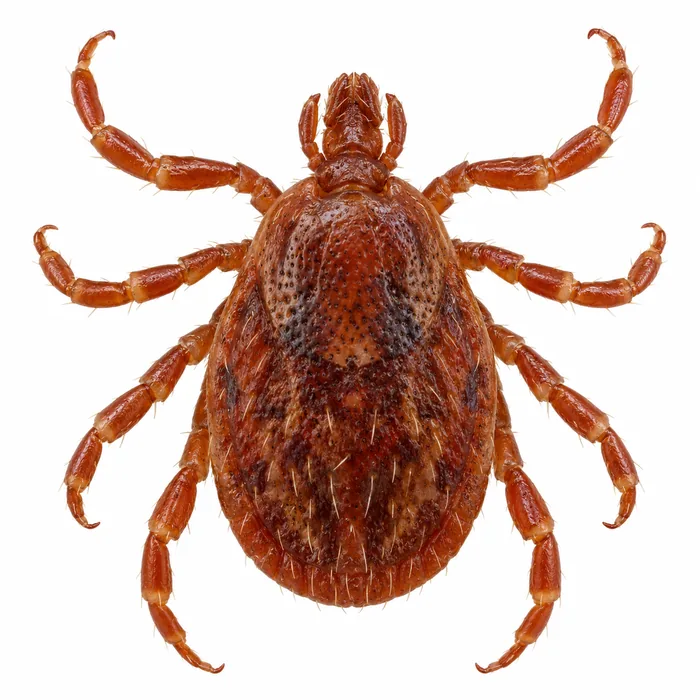
Ticks are small, blood-feeding arachnids related to spiders and mites, and Florida is home to roughly 25 to 30 species. In South Florida, the one most likely to become a household problem is the brown dog tick (Rhipicephalus sanguineus), which can live and breed indoors, in garages and in kennels, so a few ticks carried in on a dog can turn into an infestation.
- Since 1969Third generation, protecting South Florida
- 110% GuaranteeIf the bugs come back, so will Toro, at no additional cost
- Within 24 HoursResponse guaranteed
- Free InspectionPlus $25 off your first service
What Are Ticks?
Ticks are not insects. They are arachnids, related to spiders and mites, and UF/IFAS notes that they rank among the primary public health concerns, next to mosquitoes. Every tick is a parasite that needs blood to develop. Hard ticks, the main public health concern, go through four life stages (egg, larva, nymph and adult) and most species feed on a different host at each stage. That habit of moving from animal to animal is what allows ticks to carry disease.
Florida has roughly 25 to 30 tick species, but only a few matter to people and pets. South Florida is a special case. University of Florida researchers note that ticks are more common north of Interstate 4 and less common in central and South Florida, where the heat makes it harder for many species to thrive. Salty, dry air also keeps tick numbers low in many beach towns, although tall grass on dunes can still harbor them.
The tick that South Florida families meet most often is the one that does not depend on the outdoors: the brown dog tick. It is found throughout Florida, it lives wherever dogs live, and it can breed year-round inside homes and in outdoor kennels. In Miami-Dade, Broward and Palm Beach, a tick problem usually starts with a dog that picked up a few ticks at a kennel, groomer or dog park.
How to Identify Ticks
- Body: flat and oval before feeding, swollen and rounded after. Larvae have six legs; nymphs and adults have eight.
- Brown dog tick: adults are about 2.3 to 3.2 mm long and reddish-brown, with no markings on the back. Fed females swell to the size of a raisin. UF/IFAS notes that a tick with white markings on its back is not a brown dog tick.
- Lone star tick: adult females are golden brown with a distinctive white or light-colored spot in the middle of the back.
- American dog tick: fairly large and brown with white markings.
- Blacklegged (deer) tick: smaller than the other common species; adult females are red and black and males are darker brown.
Many people think they have several kinds of ticks when they are really seeing different life stages of the same species. Ticks are also easy to confuse with other small biting pests. Fleas are six-legged insects that jump, and bed bugs hide in mattresses rather than attaching to the skin for days. If you are not sure what is biting you, save a specimen between two pieces of clear tape, as UF researchers suggest, so it can be identified. Read more: Ticks vs. fleas: how to tell what is biting you
Tick Species in South Florida
Brown Dog Tick
Rhipicephalus sanguineus is the tick most likely to infest a South Florida home. Dogs are its preferred host, and it attaches to the head, ears, back, between the toes and in the armpits. It can complete its whole life cycle indoors and survive three to five months in each stage without feeding. It is the species behind most indoor and kennel infestations.
Lone Star Tick
Amblyomma americanum is called the most common human-biting tick in Florida by UF/IFAS. All life stages feed on people and domestic animals, in both wooded and open areas. Its bites have been linked to ehrlichiosis, STARI and alpha-gal syndrome, an allergy to red meat.
American Dog Tick
Dermacentor variabilis is an outdoor tick, not a household pest. Adults are most abundant from March through September in grassy fields and wooded edges, and feed on dogs and people. In Florida it is the main carrier of Rocky Mountain spotted fever.
Blacklegged (Deer) Tick
Ixodes scapularis is the tick that spreads Lyme disease. In Florida its young stages often feed on lizards and other reptiles, and adults are active from fall through spring in wooded areas and forest edges. Confirmed Lyme cases in Florida are concentrated in the north of the state.
Gulf Coast Tick
Amblyomma maculatum adults are light brown with white markings and are often found on the ears of large animals such as cattle. UF/IFAS reports it is found throughout Florida, with higher densities in the south, and it is the main carrier of Rickettsia parkeri, a spotted fever illness.
Signs of a Tick Problem
- Ticks attached to your dog, especially around the ears, head, back, armpits and between the toes.
- Small reddish-brown ticks crawling up walls, curtains or furniture, often near where the dog sleeps.
- Ticks on baseboards, carpets and dog bedding, or in cracks around window and door frames.
- Swollen, engorged females, some as large as a raisin, on the dog or dropping off in the house.
- Ticks that seem to disappear for a while and then come back, because they hide while digesting, molting or laying eggs.
- Skin irritation on dogs with heavy infestations, or bites on family members after time outdoors.
Why Ticks Are a Problem
The main concern with ticks is disease. The Florida Department of Health lists ehrlichiosis, Lyme disease and Rocky Mountain spotted fever among the most common tick-borne diseases in Florida. Each one is tied to particular species: the Florida Department of Health associates the blacklegged tick with Lyme disease and babesiosis, the lone star tick with ehrlichiosis and STARI, the American dog tick with Rocky Mountain spotted fever and the Gulf Coast tick with Rickettsia parkeri. UF/IFAS adds that the American dog tick’s saliva can cause tick paralysis in dogs and children when it attaches near the base of the skull or spine. Read more: Ticks in South Florida and Lyme disease
Timing matters. UF/IFAS notes that pathogens generally are not transmitted until a tick has been attached for roughly 24 to 48 hours, which is why prompt tick checks and removal are so important. The Florida Department of Health points out that most human infections come from nymphs in spring and summer, because they are tiny, easy to overlook and can stay attached longer.
For dogs, the brown dog tick spreads canine ehrlichiosis and canine babesiosis, both found in Florida. UF/IFAS lists signs such as fever, lameness, weight loss, loss of appetite and anemia. Dog-specific pathogens rarely infect people. If your dog has been bitten and seems unwell, call your veterinarian. Read more: What happens when a dog gets bitten by a tick
Brown dog tick infestations are also hard to end. UF/IFAS reports that a fully fed female lays about 4,000 eggs on average and can lay over 7,000, and that populations can reach high levels in homes and kennels.
Where Ticks Hide in South Florida Homes and Businesses
- Cracks and crevices: around baseboards, window and door frames, wall voids and ceiling edges, where brown dog ticks molt and lay eggs.
- Dog areas: dog beds, crates, blankets, furniture where pets rest and the carpet around them.
- Garages, patios and dog runs: screened porches, kennels and outdoor dog houses, where brown dog ticks breed year-round.
- Yards: tall grass, brush, leaf litter and overgrown lot edges, especially where lawns meet wooded areas, canals or vacant land.
- Parks and natural areas: trails, forest edges and dune grass in parks across Broward and Palm Beach.
- Businesses: boarding kennels, grooming shops, veterinary clinics and shelters, where many dogs pass through.
When Ticks Are Most Active in South Florida
| Season | Tick activity | What to do |
|---|---|---|
| Year-round (indoors) | Brown dog ticks breed all year inside homes, garages and kennels | Check dogs often and keep every dog on a tick product recommended by your veterinarian. |
| February to May (spring) | Lone star tick nymphs are active from February; American dog tick adults appear in March | Do tick checks after yard work, hikes and dog park visits. |
| June to September (summer and rainy season) | Lone star tick adults peak in July; nymphs, the stage behind most human infections, are active | Mow often, clear brush and use an EPA-registered repellent outdoors. |
| October to January (fall and winter) | Blacklegged tick adults are active from fall into spring; adults most often attach to people in fall and winter | Keep checking after time in wooded areas and dry outdoor clothes on high heat. |
How to Prevent Ticks
- Protect your dog. Ask your veterinarian which tick product fits your dog’s age, size and health, and follow the label. UF/IFAS warns that cats and some dog breeds are sensitive to certain pesticides, and that permethrin resistance in brown dog ticks has been reported in Florida.
- Check pets after outings. Inspect dogs after visits to kennels, groomers and dog parks, paying attention to ears, head, toes and armpits.
- Seal cracks and crevices in walls, baseboards and dog runs to remove hiding places.
- Wash and dry bedding hot. Wash pet bedding in hot water and dry on high heat; UF/IFAS suggests steam for furniture that cannot be washed.
- Keep the yard open and sunny. The CDC recommends clearing tall grass and brush, removing leaf litter, mowing often and keeping play areas and patios away from wooded edges.
- Protect yourself outdoors. Use an EPA-registered repellent such as DEET, picaridin or IR3535, and treat clothing with 0.5% permethrin products, following the label.
- After coming inside, tumble dry clothes on high heat for 10 minutes, as the CDC advises, shower within two hours and check under the arms, behind the knees, around the waist and in the hair. Read more: How long do ticks live on clothing?
More tips for families: How to avoid ticks in South Florida.
How Toro Gets Rid of Ticks
- InspectionA Toro technician inspects the inside and outside of your home or kennel, looking at cracks, baseboards, dog bedding, garages, dog runs and the shady, overgrown parts of the yard where ticks wait for a host.
- Identification and pet coordinationWe identify the tick and its life stages, because a brown dog tick infestation indoors calls for a different plan than ticks picked up in the yard. We explain how to prepare and ask that every dog be treated by your veterinarian at the same time.
- Targeted treatmentWe treat the cracks, crevices and resting areas where ticks hide and lay eggs, plus outdoor harborage, using products applied according to their label directions, and point out landscaping changes that make the yard less inviting to ticks.
- Follow-upTicks can survive for months between meals, so repeated treatments are often needed to break the cycle. Our 110% Satisfaction Guarantee means that if the bugs come back, so will Toro, at no additional cost to you.
Toro Pest Management has protected South Florida homes and businesses since 1969, from Miami and Hialeah to Fort Lauderdale and Boca Raton. For kennels, groomers and veterinary clinics, ask about our commercial services. We respond within 24 hours, guaranteed, and offer a free inspection plus $25 off your first service. Call 305-594-4767. Hablamos Español.
Seeing signs of ticks? Get a free inspection and $25 off your first service.
Schedule Your Free InspectionTicks: Frequently Asked Questions
Are ticks common in South Florida?
Florida has roughly 25 to 30 tick species, and UF researchers note that ticks are more common north of Interstate 4 and less common in central and South Florida, partly because of the heat. The exception is the brown dog tick. It is present throughout Florida, lives where dogs live and can breed indoors and in kennels all year, so South Florida homes with dogs can still develop serious infestations.
Do ticks in Florida carry Lyme disease?
Lyme disease is spread by the blacklegged (deer) tick. UF/IFAS notes that far fewer Lyme cases occur in Florida than in the northeastern United States, and UF researchers report that confirmed Florida cases are concentrated in the northern part of the state. The brown dog tick, the species most often found in South Florida homes, has not been shown to transmit the bacterium that causes Lyme disease.
Can ticks live in my house?
Most ticks live outdoors, but the brown dog tick is different. UF/IFAS explains that it can complete its whole life cycle indoors, hiding and laying eggs in cracks and crevices in homes, garages and dog runs. Owners often first notice ticks crawling up walls or on curtains. A single fed female lays about 4,000 eggs on average, and up to 7,000, so indoor populations can grow quickly.
How do I remove a tick safely?
The CDC recommends using clean, fine-tipped tweezers to grasp the tick as close to the skin as possible and pulling it straight out with steady, even pressure, without twisting or jerking. Then wash the bite and your hands with soap and water, rubbing alcohol or hand sanitizer. Do not use nail polish, petroleum jelly or heat. See a doctor if you develop a rash or fever within several weeks.
What is the difference between ticks and fleas?
Ticks are arachnids with eight legs as nymphs and adults; they attach and stay on the host for days while they feed and swell. Fleas are wingless insects with six legs that jump and move quickly through fur. Fleas leave dark flea dirt in a pet's coat, while brown dog ticks are often seen attached around a dog's ears, head and toes or crawling on walls.
How long can ticks live without feeding?
UF/IFAS reports that the brown dog tick can survive three to five months in each life stage without feeding. That is why an infestation can seem to disappear and then return, and why a home or kennel can still have ticks after the dog has been treated. Breaking the cycle usually requires treating the dog and the premises at the same time.
Can I get rid of ticks myself?
Light problems can be managed by having your veterinarian recommend a tick product for every dog, washing bedding in hot water, drying it on high heat and vacuuming cracks and baseboards. UF/IFAS notes that heavily infested homes or kennels usually need a professional pest control operator, and that repeated treatments are often necessary because ticks hide in protected cracks.
Related Pests
Pest Control Across South Florida
Toro treats ticks in homes and businesses throughout Miami-Dade, Broward and Palm Beach counties, including:
- Miami
- Hialeah
- Doral
- Miami Beach
- Coral Gables
- Homestead
- Fort Lauderdale
- Hollywood
- Pembroke Pines
- Miramar
- Boca Raton
- West Palm Beach
Last updated: October 29, 2026


110% Satisfaction Guaranteed
If the bugs come back, so will TORO at no additional cost to you. TORO will respond with in 24 hours Guaranteed. Our technician will arrive quickly and deal with the pest problem to prevent recurrence.

