
Red imported fire ant
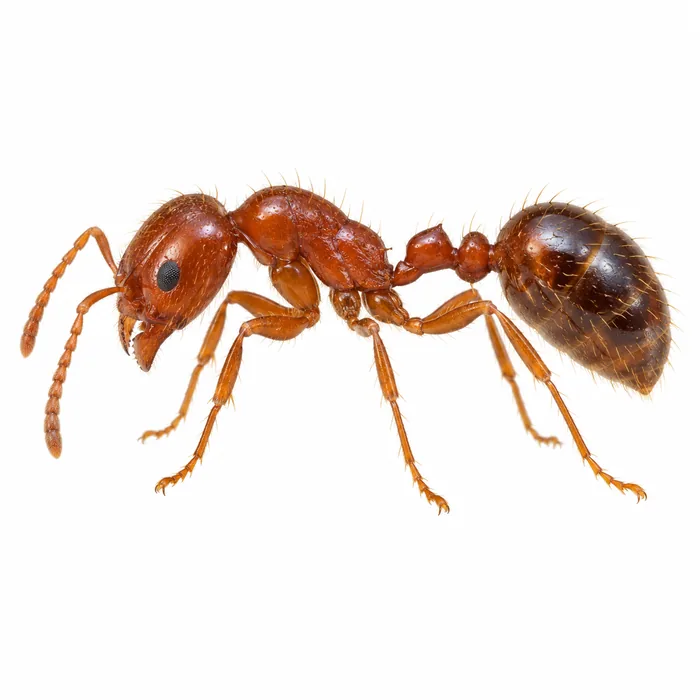
The red imported fire ant (Solenopsis invicta) is an invasive ant from South America that builds mounds in sunny lawns, parks and sidewalk edges across Florida and stings repeatedly when its nest is disturbed. In South Florida's warm, wet climate, colonies can number in the tens of thousands, move into slabs and electrical boxes and even float on floodwaters after storms.
- Since 1969Third generation, protecting South Florida
- 110% GuaranteeIf the bugs come back, so will Toro, at no additional cost
- Within 24 HoursResponse guaranteed
- Free InspectionPlus $25 off your first service
What Are Fire Ants?
The red imported fire ant, Solenopsis invicta, often shortened to RIFA, is a stinging ant native to central South America. According to UF/IFAS, it arrived in the United States from Brazil by ship, at either Mobile, Alabama, or Pensacola, Florida, sometime between 1933 and 1945. Today it is established in Florida and much of the Southeastern United States, and UF/IFAS calls it a common Florida pest known for its painful sting.
Two fire ant species live in Florida. The red imported fire ant is the most notorious. The tropical or native fire ant, Solenopsis geminata, is much less common, and UF/IFAS wildlife researchers note that it competes with the imported species and should be protected when possible. This page focuses on the red imported fire ant. For the other ants that trail into South Florida kitchens and bathrooms, see our ant guide.
South Florida gives fire ants almost everything they need: sunny, open lawns, irrigated landscapes, warm weather most of the year and a rainy season from May to October that keeps the soil moist. Fire ants favor well-manicured lawns, and in Florida’s sandy soils they often build lower mounds than the tall ones seen in clay soils farther north, which makes them easy to step on before you see them.
Read more: Fire Ants 101, a deep dive into these fascinating yet fearful insects
How to Identify Fire Ants
Fire ant workers are small to medium-sized ants, about 1/8 to 1/4 inch (2.4 to 6 mm) long. UF/IFAS describes several features that help:
- Different sizes in the same colony. Workers are polymorphic, so large and small ants come out of the same mound. Many household ants are all one size.
- Color. Usually red to reddish-brown, with a darker, blackish abdomen (gaster). The head often looks shiny red or orange.
- Two-part waist. The waist (pedicel) between the thorax and abdomen has two segments, or nodes.
- Antennae. Ten segments ending in a two-segmented club.
- Stinger. A sting is visible at the tip of the abdomen.
The mound. A mature red imported fire ant mound is a dome of loose, worked soil, usually less than 2 feet across and 6 to 8 inches high. Unlike many ant nests, it has no central opening. The ants enter and leave through underground tunnels with scattered, hidden exits. Colonies can also nest in walls and under sidewalks, slabs and roadways, where no mound is visible at all.
Fire ants vs. look-alikes. The native fire ant looks very similar, and UF/IFAS states that the two can only be told apart reliably under a microscope. Behavior gives a clue: when their nest is disturbed, red imported fire ant workers swarm out and run up grass blades and other vertical surfaces to sting. Native fire ant colonies also have large-headed workers that crush seeds. The bigheaded ant, a common South Florida nuisance ant, also leaves piles of loose soil along sidewalks and lawn edges, but it does not sting and its workers are smaller. If you are not sure what you have, a professional identification saves time and money.
Life Cycle and Behavior
A fire ant colony has queens, workers and brood (eggs, larvae and pupae). UF/IFAS reports that development from egg to adult takes 22 to 38 days: eggs hatch in 8 to 10 days, the larval stage lasts 6 to 12 days and the pupal stage 9 to 16 days. A queen lays 10 to 15 eggs within a day of mating and, in a mature colony, up to 1,500 eggs a day. Queens live about 2 to 6 years, while workers live from about 30 to 180 days depending on their size.
A colony may have several thousand workers by six months. A typical mature colony holds about 80,000 workers, and large ones reach about 240,000. Some colonies have a single queen (monogyne) and others have many queens (polygyne). UF/IFAS notes that reports of multiple-queen colonies, including in Florida, have become more frequent since 1973. They produce smaller workers and many more mounds, closer together, so a single lawn can be dotted with them.
Mating flights. Colonies release winged males and females (alates) six to eight times a year between spring and fall, with up to 4,500 alates per flight. Flights usually happen around midday on warm, sunny days, above about 74°F, after rain. Males die after mating, and newly mated queens land and start new colonies. Winged fire ants are often attracted to swimming pools.
Feeding. Workers eat dead insects, earthworms and other animals, honeydew from plant-feeding insects, and sweets, proteins and fats, including food in homes. UF/IFAS extension agents note that only a portion of the colony is out feeding at any one time, which is one reason spraying the ants you see does little.
Rafts in floods. When floodwaters fill their underground nests, fire ants link their bodies into a floating raft or ball that carries the queen, workers and larvae until it reaches higher ground, such as a tree, a palm frond, a debris pile, a building or a person’s leg. UF/IFAS warns that these rafts are a painful hazard during hurricane and flood cleanup.
Read more: How fire ants survive flood waters
Signs of a Fire Ant Problem
- Dome-shaped mounds of loose soil in sunny areas of the lawn, garden beds, the edges of driveways and sidewalks, or around utility boxes.
- Mounds with no opening on top that erupt with ants when touched or stepped on.
- New mounds appearing after heavy rain.
- Small piles of soil coming up through cracks in pavers, patio slabs or the edges of a pool deck.
- Ants of many different sizes swarming up grass blades or your shoes.
- Itchy red bumps that turn into white pustules a day later on children, gardeners or anyone who sat on the lawn.
- Ants in or around electrical boxes, AC units or pump equipment.
- Brownish-red floating mats on standing water after a storm.
Why Fire Ants Are a Problem
Stings. A fire ant grips the skin with its jaws and then stings, often several times. UF/IFAS explains that the venom is about 95% alkaloids, and it causes a burning pain and a white pustule about a day later. The CDC adds that people allergic to insect venom can have anaphylaxis, a reaction that requires immediate emergency care. Seek emergency help for severe chest pain, nausea, severe sweating, loss of breath, serious swelling or slurred speech. If the blisters are broken open, UF/IFAS notes they can become infected. Keep an eye on young children, older adults and pets in yards with mounds.
Read more: Safeguarding your loved ones from fire ant bites
Damage around the property. UF/IFAS documents fire ants nesting under patio slabs, sidewalks, foundations, driveways and electrical boxes, and nest cavities can make slabs settle and fall. Fire ants have also been found inside electrical systems, where they have caused short circuits.
Gardens and wildlife. Fire ants feed on young plants of crops like okra, cabbage, citrus, corn and peanuts, and UF/IFAS reports they can reduce populations of ground-nesting birds and other wildlife. For home gardeners in Miami-Dade, Broward and Palm Beach, that can mean damaged seedlings and stings every time you weed.
Read more: Fire ants in your garden, the green thumb’s guide to protecting your plants and the hidden cost of fire ants in your garden.
Where Fire Ants Hide in South Florida Homes and Businesses
- Sunny lawns. Open St. Augustine and other turf areas, especially along the edges where the grass meets a driveway or walkway.
- Under pavers and slabs. Pool decks, patios, sidewalks and driveways, where colonies nest without a visible mound.
- Around utility and electrical boxes. AC pads, pool pump equipment, irrigation controllers and outdoor junction boxes.
- Garden beds and mulch. Vegetable gardens, flower beds and the base of palms and fruit trees.
- Parks, playgrounds and sports fields. UF/IFAS lists yards, gardens, parks, playing fields and cemeteries among their favorite urban sites, which matters for HOAs, schools and property managers.
- Canal banks, lake edges and retention ponds. Moist, sunny ground near water, common in communities from Doral to Weston and Wellington.
- After a storm. On debris piles, fallen palm fronds and against buildings, where flood rafts come to rest.
When Fire Ants Are Most Active in South Florida
| Season | Fire ant activity | What to do |
|---|---|---|
| January to March (dry season) | Colonies remain underground; in dry, sandy soil, mounds can be low and easy to miss | Walk the lawn and edges before children play outside and mark any mounds. |
| April to May (spring) | Mating flights begin on warm, sunny days after rain; new queens start colonies | Warm weather is when ants forage for baits; schedule treatment as activity picks up. |
| May to October (rainy season) | Mounds reappear after storms; repeated mating flights; in extreme heat, ants move deeper into the soil | In the summer heat, baits work best applied toward dusk on dry grass. |
| June to November (hurricane season) | Floodwaters can turn colonies into floating rafts that drift against homes and debris | Wear gloves, closed-toe shoes, long sleeves and long pants during cleanup. |
| November to December | Flights taper off by late fall; colonies stay in the lawn | Check for mounds that came back after the rainy season and treat them. |
How to Prevent Fire Ants
- Inspect the lawn regularly. Find mounds early, before they spread across the yard.
- Do not disturb mounds. The CDC advises not standing on or near mounds, and checking items for ants before you lift them off the ground.
- Use baits the right way. UF/IFAS extension agents recommend fresh bait, placed around the mound rather than poured into it, applied during warm weather when ants are foraging and only on dry ground, because wet bait is no longer useful. Always follow the label.
- Skip the home remedies. Club soda, grits, soap, wood ashes and shoveling do not eliminate colonies, according to UF/IFAS.
- Do not flood or kick mounds. UF/IFAS notes that if the queen survives deep in the mound, the colony is likely to recolonize.
- Protect electrical equipment. Keep the area around AC units, pool pumps and electrical boxes clear and check them for soil and ants.
- Be careful after storms. Do not push a floating raft under water, scoop it with a net or spray it with a hose, which makes the ants attack. Brush ants off your skin instead of rinsing them.
- Dress for yard work. Gloves, closed-toe shoes and long pants make a big difference when you garden or mow near mounds.
How Toro Gets Rid of Fire Ants
- InspectionA Toro technician walks your lawn, garden beds, slabs, pool deck and utility areas to find active mounds and hidden colonies under pavers and walkways.
- IdentificationWe confirm that you are dealing with red imported fire ants and not the native fire ant or a nuisance ant like the bigheaded ant, because each one calls for a different approach.
- Targeted treatmentWe treat the colonies and the lawn with products chosen for fire ants and applied according to their label directions, timed for when the ants are foraging. Our lawn spray service treats lawn insects such as fire ants with power lawn sprays and granules.
- Follow-upWe check for new mounds, especially after the rainy season and storms, and recommend changes that make your yard less inviting. Our 110% Satisfaction Guarantee means that if the bugs come back, so will Toro, at no additional cost to you.
Toro Pest Management has protected South Florida homes and businesses since 1969, from family lawns in Hialeah and Doral to parks, schools and HOA common areas in Fort Lauderdale and Boca Raton. We respond within 24 hours, guaranteed, the first inspection is free and new customers get $25 off their first service. Call 305-594-4767. Hablamos Español.
Seeing signs of red imported fire ant? Get a free inspection and $25 off your first service.
Schedule Your Free InspectionRed imported fire ant: Frequently Asked Questions
Are fire ants dangerous?
For most people, fire ant stings are painful but not dangerous. The CDC explains that the venom causes a burning sensation and that red bumps can turn into white, fluid-filled pustules within a day or two. People who are allergic to insect venom can have a severe reaction. Get emergency care right away for symptoms such as severe chest pain, nausea, severe sweating, loss of breath, serious swelling or slurred speech.
How do I know if I have fire ants or another ant?
Fire ants build dome-shaped mounds of loose soil in sunny spots, and the mound has no opening on top because the ants come and go through underground tunnels. When the mound is disturbed, workers of many different sizes pour out and run up grass blades and nearby objects to sting. Florida also has a native fire ant, and UF/IFAS notes that only a microscope can reliably tell the two apart.
What should I do if I get stung by fire ants?
Move away from the mound and brush the ants off briskly, because they grip the skin with their jaws. UF/IFAS advises against spraying them with water or jumping into a pool, since they only hold on tighter. The CDC notes that antihistamines may help, following the package directions. Do not break the pustules, which can become infected, and seek emergency care if you have signs of an allergic reaction.
Why do fire ant mounds appear after it rains?
Fire ants nest underground, and in very hot, dry weather they move deeper into the soil for cooler temperatures and moisture, so the mounds can seem to disappear. Once rain soaks the ground they rebuild near the surface. That is why South Florida homeowners often notice new mounds in the lawn after heavy rainy-season storms.
Do home remedies like grits or club soda kill fire ants?
No. UF/IFAS reports that home remedies such as club soda, grits, soap, wood ashes and shoveling mounds have been shown to be ineffective, and some can be dangerous to people and the environment. If the queen survives deep in the mound, UF/IFAS notes that the colony is likely to come back. Baits labeled for fire ants are considered the most effective way to reach the queen.
How long does it take to get rid of fire ants?
It depends on the method and the size of the infestation. Baits work slowly because workers have to carry them back and feed them to the queen and the brood, and UF/IFAS extension agents note that treated mounds usually die within weeks of the first application. Mound drenches act faster on the ants they reach but may miss the queen. Neighboring lawns can reinfest a yard, so follow-up is common.
Can fire ants get inside my house?
Yes. Fire ants usually nest outdoors, but UF/IFAS documents colonies under patio slabs, sidewalks, foundations, driveways and electrical boxes, and foragers can enter buildings looking for food, including sweets, proteins and fats. During heavy rain and flooding, colonies move to higher ground and can end up against or inside homes. Fire ants have also been found in electrical systems, where they have caused short circuits.
Related Pests
Pest Control Across South Florida
Toro treats red imported fire ant in homes and businesses throughout Miami-Dade, Broward and Palm Beach counties, including:
- Miami
- Hialeah
- Doral
- Miami Beach
- Coral Gables
- Homestead
- Fort Lauderdale
- Hollywood
- Pembroke Pines
- Miramar
- Boca Raton
- West Palm Beach
Last updated: October 29, 2026


110% Satisfaction Guaranteed
If the bugs come back, so will TORO at no additional cost to you. TORO will respond with in 24 hours Guaranteed. Our technician will arrive quickly and deal with the pest problem to prevent recurrence.

