
Ghost ant
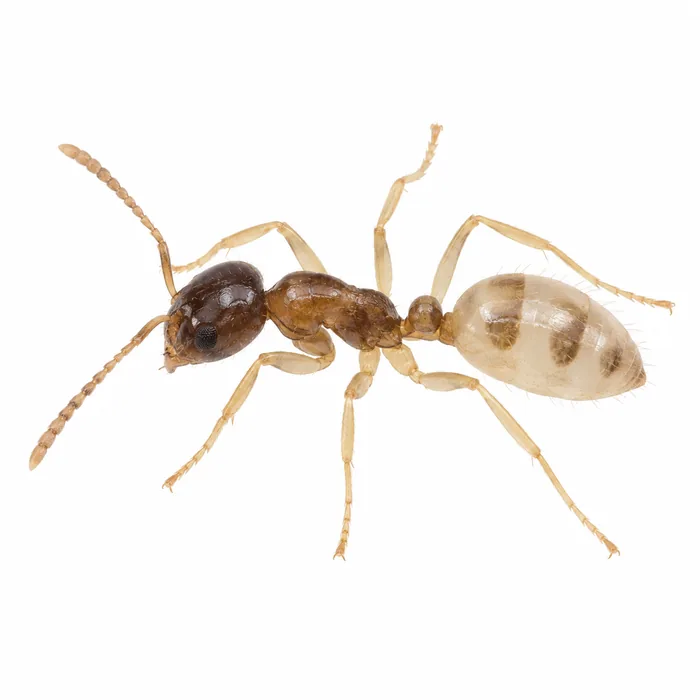
The ghost ant (Tapinoma melanocephalum) is a tiny tropical ant, about 1.5 mm long, with a dark head and a pale, almost see-through abdomen that makes it hard to spot on countertops. UF/IFAS considers it a major household pest in Florida, and in South Florida its colonies, with many queens and several connected nests, are a common reason for ant trails in kitchens and bathrooms.
- Since 1969Third generation, protecting South Florida
- 110% GuaranteeIf the bugs come back, so will Toro, at no additional cost
- Within 24 HoursResponse guaranteed
- Free InspectionPlus $25 off your first service
What Are Ghost Ants?
The ghost ant, Tapinoma melanocephalum, is one of the smallest ants that South Florida homeowners deal with. It gets its name from its pale, nearly transparent abdomen and legs, which make the ants seem to disappear against a white counter or sink. It is a tropical species, and UF/IFAS notes that its original home is hard to pin down because commerce has carried it around the world. Today it is found in tropical and subtropical regions worldwide, and in the United States it is established in Florida and Hawaii.
In Florida, ghost ants are found mostly from Sarasota and Orlando south, with some records as far north as Gainesville and Duval County. By 1995 the ghost ant was common in central and southern Florida and had become a major pest. That puts all of Miami-Dade, Broward, Palm Beach and the Florida Keys squarely within its range. In colder states it survives only in greenhouses and other heated buildings.
South Florida’s heat and humidity are a big part of the reason. Ghost ants are sensitive to drying out and are found mainly in humid habitats. Our year-round warmth, the rainy season from May to October, irrigated landscaping, potted plants on every balcony and the moisture inside kitchens and bathrooms give them plenty of places to live.
This page covers the ghost ant in depth. For the other ant species in South Florida, such as bigheaded ants, white-footed ants and crazy ants, see our ant guide.
Read more: The secret life of ghost ants, understanding our tiny intruders
How to Identify Ghost Ants
Ghost ants are easy to recognize once you know what to look for:
- Size. Workers are 1.3 to 1.5 mm long, about 1/16 inch, and all the same size (monomorphic).
- Color. The head and thorax are deep dark brown, and the abdomen (gaster) and legs are pale or milky white.
- Waist. The waist (pedicel) has a single node, usually hidden from view by the abdomen.
- Antennae. Twelve segments that gradually get thicker toward the tip.
- Movement. Workers run fast and erratically when disturbed. On established trails they move more slowly and may carry brood.
- Smell. UF/IFAS notes that crushed workers give off an odor similar to rotten coconuts. Their relative, the odorous house ant, is better known for that smell, so use size and color to confirm.
Ghost ants vs. other tiny ants. Several small ants share South Florida kitchens, and each one responds differently to treatment:
- Pharaoh ant. About 2 mm long and light yellow to orange all over, with a two-segmented waist. It is not bicolored like the ghost ant.
- White-footed ant. Black to brownish-black, 2.5 to 3 mm long, with yellowish-white feet. It is larger and darker than the ghost ant.
- Bigheaded ant. Reddish-brown, about 2 mm long, with some workers that have oversized heads.
- Odorous house ant. A relative in the same genus that also smells like rotten coconut when crushed, but UF/IFAS describes it as larger and entirely dark brown to black.
If you are not sure which ant you have, collect a few in a sealed bag or a piece of clear tape. A correct identification is the first step to choosing the right bait.
Life Cycle and Behavior
Ghost ant colonies are moderate in size, with roughly 100 to 1,000 ants according to university extension specialists, and they contain many egg-laying queens (polygyny). What makes them hard to control is how the colony is organized. UF/IFAS explains that a colony splits into subunits spread across several nest sites, and these nests exchange workers along odor trails. No fighting has been reported between nests, so one “infestation” can be a network of connected nests in walls, cabinets, plants and the yard.
New colonies usually form by budding. One or more queens leave with a group of workers, and sometimes brood, to set up a new nest nearby. Researchers note that it is unknown whether ghost ants have mating flights at all, so you are unlikely to see winged ghost ants the way you see winged carpenter ants or termites.
Ghost ants have a sweet tooth. They prefer sugar, cakes and syrups, and they also eat live and dead insects. Outdoors, they tend aphids, whiteflies and other honeydew-producing insects and collect the honeydew they excrete. Ghost ants can even be helpful outside, since they prey on small pests such as twospotted spider mites in greenhouses.
Because the ant spreads with people and plants, potted plants are a common way in. UF/IFAS reports that the ghost ant reached Texas around 1994 or 1995, most likely in a plant shipment from Florida, and Florida quarantine greenhouses have been infested.
Signs of a Ghost Ant Problem
- Thin trails of tiny ants along countertops, backsplashes, baseboards, window sills or bathroom fixtures.
- Ants in sugar bowls, syrup bottles, fruit, pet food or the trash.
- Ants clustering around sinks, faucets, dishwashers, under-sink cabinets or anywhere with a leak or condensation.
- Ants that seem to appear and disappear because their pale bodies blend into light surfaces.
- Ants coming out of cracks in cabinets, behind baseboards or gaps around pipes, often from nests in wall voids.
- Ants crawling out of the soil of potted plants, inside or on the balcony.
- Ant trails on palms, hedges or ornamental plants that also have aphids, scales or whiteflies.
Why Ghost Ants Are a Problem
Ghost ants do not sting, but UF/IFAS lists them as a major household pest in Florida for good reason. Foragers are often seen in kitchens and bathrooms, on sinks, counters and floors, and they get into sweets and other food. For most families the main issue is contamination and frustration: the trails keep coming back.
Read more: The negative impact of ghost ants in your home
For businesses, ants in food preparation areas, guest rooms or patient areas are a sanitation problem that can affect inspections and reviews. Restaurants, hotels and health care facilities in South Florida benefit from regular commercial pest control that includes ant monitoring, especially in buildings with many plants and water sources.
Outside, ghost ants that tend honeydew-producing insects can make plant pest problems worse on ficus hedges and ornamentals, because the ants protect those insects. If you also see whiteflies or sooty mold, our whitefly control service may be part of the solution.
Where Ghost Ants Hide in South Florida Homes and Businesses
UF/IFAS lists a wide range of nesting sites, indoors and out:
- Wall voids. Behind drywall, especially near plumbing in kitchens and bathrooms.
- Cabinets and baseboards. In the spaces between cabinetry and baseboards and in cracks along countertops.
- Potted plants. In the soil of indoor plants and balcony planters, a common way for ghost ants to arrive in a new home.
- Between books and stored items. Ghost ants can nest in very small, undisturbed spaces.
- Palms and shrubs. At the bases of palm fronds and in plant stems, then into the building on branches that touch the walls or roof.
- Under objects on the ground. Under loose bark, landscape debris, flower pots and stones, and in tufts of moist dead grass.
- Near the foundation. UF/IFAS notes that many indoor foragers come from nests outside near the foundation.
- High-rises and condos. In buildings with shared walls, pipe chases and planters, nests can connect units, so treating one apartment may not be enough. Building-wide plans for property managers help.
Read more: Why ghost ants love your home
When Ghost Ants Are Most Active in South Florida
| Season | Ghost ant activity | What to do |
|---|---|---|
| January to April (dry season) | Colonies stay active in South Florida's mild weather; ants that need moisture look for water indoors near sinks, leaks and AC condensation | Fix leaks and dry out under-sink cabinets. |
| May to October (rainy season) | Warm, humid conditions suit ghost ants outdoors; aphids, whiteflies and scales on landscape plants provide honeydew | Trim plants away from the house and control plant pests. |
| June to November (hurricane season) | Storms knock down branches and pile up debris, creating new nesting sites close to the house | Clear yard debris quickly after storms. |
| Year-round | Colonies keep budding into new nests, so trails can return in any month | Keep up regular service, especially in condos and apartments. |
How to Prevent Ghost Ants
- Keep it clean. UF/IFAS calls cleanliness the best approach. Wipe up crumbs and spills, rinse dishes and take out the trash often.
- Seal food. Store sugar, cereal, syrups, honey and pet food in tight containers.
- Remove moisture. Fix leaking faucets and pipes, dry wet areas and deal with condensation from AC lines and appliances.
- Check plants before bringing them inside. Look at the soil and the base of new potted plants for ants.
- Trim vegetation. Cut back ficus hedges, palm fronds and shrubs so they do not touch the walls, windows or roof.
- Control plant pests. UF/IFAS recommends dealing with aphids, whiteflies and other honeydew producers, or removing plants that attract them.
- Seal entry points. Caulk cracks and gaps around pipes, windows, doors and screens.
- Bait patiently. If you use a bait, place it along the trail and check it within a day or two. If ants are not feeding, move it.
How Toro Gets Rid of Ghost Ants
- InspectionA Toro technician follows the trails inside and outside your home or business to find where the ghost ants are nesting, whether that is a wall void, a cabinet, a potted plant or the landscape near the foundation.
- IdentificationWe confirm that you have ghost ants and not pharaoh ants, white-footed ants or another small ant, because each species prefers different foods and baits.
- Targeted treatmentWe treat the nests, trails and entry points inside and around the perimeter, using products chosen for ghost ants and applied according to their label directions.
- Follow-up and preventionWe recommend changes that keep ghost ants out, such as fixing moisture problems and trimming plants, and schedule follow-up visits. Our 110% Satisfaction Guarantee means that if the bugs come back, so will Toro, at no additional cost to you.
Read more: Ghost ants, decoding the signals of an invisible invasion
Toro Pest Management has protected South Florida homes and businesses since 1969, from kitchens in Hialeah and Coral Gables to condos in Miami Beach and restaurants in West Palm Beach. Our residential pest control plans start with a free inspection, we respond within 24 hours, guaranteed, and new customers get $25 off their first service. Call 305-594-4767. Hablamos Español.
Seeing signs of ghost ant? Get a free inspection and $25 off your first service.
Schedule Your Free InspectionGhost ant: Frequently Asked Questions
What are the tiny ants with clear bodies in my kitchen?
In South Florida, tiny ants with a dark head and a pale, almost transparent abdomen are most likely ghost ants. Workers are only about 1.3 to 1.5 mm long, and UF/IFAS describes their abdomen and legs as milky white, which is why they seem to vanish on light countertops. They are drawn to sweets and moisture and are commonly seen on sinks, counters and bathroom fixtures.
Are ghost ants harmful?
Ghost ants are considered a nuisance pest. UF/IFAS notes that they have no stinger. The problem is contamination: they crawl over counters, sinks, food and appliances while foraging for sweets and other food. In homes, restaurants and other businesses, that makes them a sanitation concern even though they are not dangerous.
Why do ghost ants keep coming back?
Ghost ant colonies have many queens and are split into several nests that share workers along scent trails. They also form new colonies by budding, when queens and workers move to a new site. Killing the workers on the counter does not reach those queens or the other nests, which may be in a wall, a potted plant or the landscape outside, so the trail returns.
What attracts ghost ants?
Ghost ants prefer sweets such as sugar, cakes and syrups, and they also feed on live and dead insects and on honeydew from plant pests like aphids and whiteflies. They need a lot of moisture, so leaks, condensation and wet areas in kitchens and bathrooms draw them in. Indoor foragers often come from nests outside near the foundation or from plants touching the building.
How can I tell ghost ants from other tiny ants?
Look at color and size. Ghost ants are bicolored, with a dark head and thorax and a pale abdomen. Pharaoh ants are about 2 mm long and light yellow to orange all over. White-footed ants are black with pale yellowish feet and about 2.5 to 3 mm long. Ghost ants also have a single node in the waist that is hidden by the abdomen. Crushed workers smell like rotten coconuts, but so does their larger, all-dark relative, the odorous house ant, so smell alone is not proof.
Can I get rid of ghost ants myself?
Keeping food sealed, fixing leaks, wiping up spills and trimming plants away from the house all help. UF/IFAS recommends following the trails back to the nest and notes that baits can control indoor colonies in wall voids. If no ants are feeding on a bait within a day or two, it should be moved. Because colonies have many queens and nests, stubborn infestations often need a professional plan.
How long does it take to get rid of ghost ants?
It varies with the number of nests and where they are. Baits work slowly by design, because foragers must carry them back to the queens and the rest of the colony. Nests outside in mulch, plants or palm fronds also need attention, or the ants will keep coming in. Plan on follow-up visits rather than a single treatment, especially in condos and apartments that share walls.
Related Pests
Pest Control Across South Florida
Toro treats ghost ant in homes and businesses throughout Miami-Dade, Broward and Palm Beach counties, including:
- Miami
- Hialeah
- Doral
- Miami Beach
- Coral Gables
- Homestead
- Fort Lauderdale
- Hollywood
- Pembroke Pines
- Miramar
- Boca Raton
- West Palm Beach
Last updated: October 29, 2026


110% Satisfaction Guaranteed
If the bugs come back, so will TORO at no additional cost to you. TORO will respond with in 24 hours Guaranteed. Our technician will arrive quickly and deal with the pest problem to prevent recurrence.

