
Key takeaways
- An Aedes mosquito egg can develop into an adult in 7 to 10 days, so drain standing water at least once a week.
- Aedes eggs stick to container walls above the waterline and can survive drying out for months, so scrub containers, do not just tip them.
- Repellents with 10-30% DEET, picaridin, oil of lemon eucalyptus or IR3535 are what Florida health officials recommend.
- Citronella and DEET wristbands gave little or no protection in UF testing, and UF/IFAS finds no evidence that sound devices or yard plants repel mosquitoes.
- The Asian tiger mosquito bites in the daytime, so dusk-only precautions are not enough in South Florida.
In this article
- Why South Florida Mosquito Season Hits So Hard
- Tip 1: Drain Standing Water Every Week
- Tip 2: Mosquito-Proof Your Yard and Home
- Tip 3: Choose a Repellent That Actually Works
- Tip 4: Use Fans and Traps as Extras, Not Your Main Defense
- Mosquito Myths to Skip This Season
- Tip 5: Plan Ahead With Professional Mosquito Control
- Your Mosquito Season Checklist
- Frequently Asked Questions
The best way to prepare for mosquito season is to stop mosquitoes where they start: in standing water around your home. Pair that with screens, an EPA-registered repellent and a realistic plan for the hours you spend outside, and you cut both the bites and the health risk.
In South Florida, “mosquito season” never fully ends. Miami-Dade County’s mosquito control program is staffed 365 days a year, and every summer storm refills the buckets, gutters and plant saucers that mosquitoes use as nurseries. The five tips below focus on what actually works, based on guidance from the Florida Department of Health, the CDC and University of Florida research, and they flag the popular tricks that do not.
Why South Florida Mosquito Season Hits So Hard
Mosquitoes need two things to multiply: warmth and water. South Florida has both almost all year, and the rainy season, roughly May through October, adds frequent downpours that fill every container in the yard. After a hurricane or tropical storm, flooded yards and debris can turn into breeding sites that produce new adults within a week or two. Our guide to why mosquito problems get worse after rain explains that boom in detail.
Speed is the other problem. According to the CDC, an Aedes mosquito egg takes 7 to 10 days to become an adult. Females lay eggs on the inner walls of containers, just above the waterline, and those eggs can survive drying out for up to 8 months. When rain raises the water level, they hatch.
Miami-Dade is home to more than 50 mosquito species. Only a few are serious pests, but some can carry dengue, chikungunya, West Nile virus, Zika and encephalitis viruses, as well as dog heartworm, according to Miami-Dade County Mosquito Control. For a closer look at the illnesses, see our guide to mosquito-borne diseases in South Florida.
Not Just a Dusk Problem
Many people think mosquitoes only come out at sunset. The Asian tiger mosquito, a black-and-white striped container breeder now found in all 67 Florida counties, is a daytime feeder, with peaks in the early morning and late afternoon (UF/IFAS). Aedes aegypti also lives indoors and outdoors. If you only protect yourself at dusk, you leave most of the day uncovered.
Tip 1: Drain Standing Water Every Week
This is the single most effective step, and it costs nothing. Since an egg can become an adult in 7 to 10 days, a weekly check after rain breaks the cycle before new adults emerge. The Florida Department of Health calls this the “Drain” half of its Drain and Cover campaign.
Walk your property and empty or fix:
- Buckets, coolers, toys, trash can lids and pool covers
- Flowerpots and plant saucers
- Old tires, cans, bottles, broken appliances and anything else you no longer need
- Birdbaths and pet water bowls: empty and clean them at least twice a week
- Boat and vehicle tarps that sag and collect water
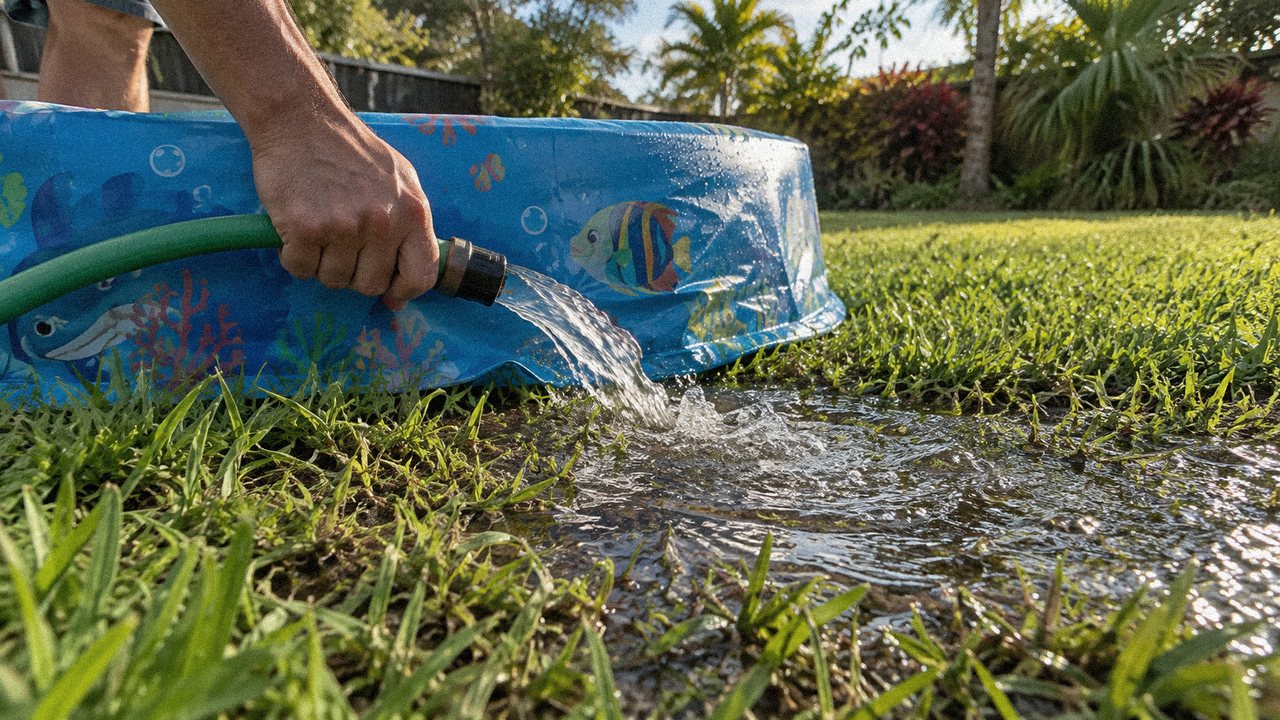
- Kiddie pools when not in use
Tipping a container out is not quite enough. Because Aedes eggs cling to the walls above the waterline, scrub birdbaths, pet bowls and buckets before refilling them. Keep swimming pools in good condition and properly chlorinated.
For water you cannot drain, such as ponds, rain barrels, decorative fountains and bromeliads, Miami-Dade recommends Bti, a naturally occurring bacterium that kills only mosquito and black fly larvae. Use any larvicide strictly according to its label.
Need help with pests in South Florida?
Toro Pest Management has protected homes and businesses since 1969. Get a free inspection and $25 off your first service, backed by our 110% Satisfaction Guarantee: if the pests come back, so do we, at no extra cost.
Tip 2: Mosquito-Proof Your Yard and Home
Once the obvious containers are gone, fix the features of your property that keep collecting water or let mosquitoes inside.
- Clean gutters. Clogged gutters let rainwater pool and attract egg-laying females.
- Fill low spots. Miami-Dade suggests filling lawn holes, tree holes and the area under air conditioner drains with sand.
- Screen it. Cover windows, doors, porches and patios with fine mesh, and repair any tears.
- Trim dense shrubs. Adult mosquitoes rest in shady, humid vegetation during the hottest part of the day, so thinning it out leaves them fewer hiding places.
- Point sprinklers carefully. Overwatering leaves puddles and soggy spots that last for days.
| Breeding or resting site | Why it matters | What to do |
|---|---|---|
| Plant saucers and pots | Hold water for days after rain or irrigation | Empty at least once a week |
| Birdbaths and pet bowls | Eggs stick to the walls above the water | Empty and scrub at least twice a week |
| Gutters and roof drains | Debris traps rainwater out of sight | Clean before and during the rainy season |
| Bromeliads | Leaf cups hold water constantly | Treat with Bti, following the label |
| Tarps, tires and debris | Folds and hollows collect rain | Remove, store dry or stretch tarps tight |
| Dense, shady shrubs | Adults rest there during the day | Trim and thin to improve airflow |
Tip 3: Choose a Repellent That Actually Works
The old advice to “use whatever repellent you like” leaves a lot of people unprotected. The Florida Department of Health says repellents with 10-30% DEET, picaridin, oil of lemon eucalyptus or IR3535 tend to be most effective. Look for an EPA registration number on the label, and always follow the label directions.
University of Florida researchers tested common products for how long they gave complete protection from bites. The differences are large:
Source: UF/IFAS EDIS, Mosquito Repellents (IN419)
In this test, a higher DEET percentage mainly bought longer protection. UF/IFAS notes that the American Academy of Pediatrics says 10% DEET products appear to be as safe as 30% products when used as directed, and that oil of lemon eucalyptus should not be used on children under 3. For babies younger than 2 months, the Florida Department of Health recommends mosquito netting instead of repellent.
A few rules make any repellent work better:
- Apply it to exposed skin and clothing.
- Reapply as often as the label directs.
- Wear shoes, socks, long pants and long sleeves when mosquitoes are active.
Repellent protects the person wearing it, not the people around them. At a backyard party, guests who skip it will still get bitten, which is why yard treatment and source reduction matter.
Tip 4: Use Fans and Traps as Extras, Not Your Main Defense
Some tools help at the edges. UF/IFAS Extension points out that mosquitoes cannot fly well in a strong wind, so an outdoor fan aimed across a patio or seating area is a simple way to reduce bites where you sit.
Backyard mosquito traps can catch a lot of mosquitoes, but they do not stop new ones from hatching in your gutters or your neighbor’s buckets. Treat a trap as a supplement to draining water and wearing repellent, never as a replacement. Electric bug zappers are a poor choice: UF/IFAS Extension says they have not been scientifically proven effective against mosquitoes and they kill many other insects.
If you are considering an automatic system, read the truth about mosquito misting systems before you buy one.
Mosquito Myths to Skip This Season
You will often see basil, lavender, mint, geraniums and garlic recommended to keep mosquitoes away. The research does not support it.
- Repellent plants: UF/IFAS Extension says simply growing lemongrass, rosemary or scented geraniums around your patio does nothing to repel mosquitoes. Enjoy them as plants, not as protection.
- Garlic: There is no scientific evidence that eating garlic or other foods makes you less attractive to mosquitoes (UF/IFAS).
- Citronella: Products with 10% citronella gave only about 20 minutes of complete protection in UF testing.
- Wristbands: Even wristbands containing DEET provided zero minutes of complete protection.
- Sound and ultrasonic devices: There is no evidence that wearable devices that emit sound repel mosquitoes, and UF/IFAS Extension lists plug-in ultrasonic devices among methods not shown effective in studies.
Tip 5: Plan Ahead With Professional Mosquito Control
If you drain and cover faithfully and still cannot enjoy your yard, the problem is usually breeding sites you cannot see, resting spots in dense landscaping or mosquitoes flying in from nearby properties. That is when a professional service helps.
Toro’s mosquito control service starts with a free inspection of the outside of your home or business to find where mosquitoes breed and hide, from birdbaths and fountains to gutters, pool covers and shady areas. Technicians then:
- Apply a barrier treatment made with plant oils (rosemary oil, geraniol and peppermint oil) to the shrubs and plants where adults rest
- Treat breeding sites with larvicide granules and growth regulators
- Point out the containers, gutters and plants that hold water, so fewer mosquitoes hatch between visits
You can book a one-time treatment before a party or outdoor event, or the 3-month plan of 4 treatments, one every 3 weeks, aimed especially at March through November when mosquitoes are most active. Toro has protected South Florida homes and businesses since 1969, and if the bugs come back, so will Toro, at no additional cost to you.
County mosquito control complements private service. In Miami-Dade you can call 311 to request a county mosquito inspection, and an inspector typically visits within one to two business days.
Your Mosquito Season Checklist
Use this as a quick reference at the start of the rainy season and after every big storm:
- Walk the yard once a week and drain, scrub or remove anything holding water.
- Clean gutters and fill low spots, tree holes and AC drain areas.
- Check and repair window, door and patio screens.
- Stock an EPA-registered repellent with DEET, picaridin, oil of lemon eucalyptus or IR3535.
- Cover up and use repellent in the daytime too, not just at dusk.
- Set up a fan for patio seating.
- Book a professional treatment before outdoor events or if bites continue despite these steps.
For more ways to keep the yard livable all season, read our practical tips to keep mosquitoes away from your South Florida home.

Contact Toro today
A free inspection & $25 off your first service
A trained Toro technician inspects your home or business, explains what was found and gives you a clear plan and quote, backed by our 110% Satisfaction Guarantee.
305-594-4767Frequently Asked Questions
When is mosquito season in South Florida?
How much water does a mosquito need to breed?
Do mosquito-repelling plants like citronella and lavender really work?
Is DEET safe to use?
Can I ask the county to spray for mosquitoes?
Sources
- Drain and Cover to Prevent Mosquito-Borne Illness, Florida Department of Health
- Life Cycle of Aedes Mosquitoes, Centers for Disease Control and Prevention
- Mosquito Repellents (EDIS IN419), UF/IFAS Extension
- Asian Tiger Mosquito, Aedes albopictus (EDIS IN594), UF/IFAS Extension
- Mosquito Tips and Resources, Miami-Dade County Mosquito Control
- Mosquitoes: What Works and What Doesn't, UF/IFAS Extension Duval County
Educational content. This article is for general information about pests in South Florida and is not medical, legal or professional advice. If you have a bite, sting or allergic reaction, contact your doctor; in an emergency, call 911. Pest problems vary from home to home, so a licensed professional should inspect before treatment. When using any pesticide, always read and follow the product label.


