
Key takeaways
- Termites are treatable, but hard to reach: subterranean colonies live in the soil and drywood colonies live deep inside the wood.
- Subterranean and drywood termites need completely different treatments, so identifying the species comes first.
- Tenting does not work on subterranean termites, and soil treatments do not work on drywood termites.
- The EPA says termiticide application can in most cases only be properly done by a trained professional.
- Local drywood treatments can miss hidden colonies; survivors can rebuild the infestation.
In this article
Termites are difficult to treat because you almost never reach them directly: subterranean colonies live in the soil, sometimes well away from the house, and drywood colonies live deep inside pieces of wood you cannot see into. They are very treatable, but only with the right method for the species, applied where the colony actually is.
That is why home remedies and store-bought sprays so often disappoint, and why the same company may tent one house and install bait stations around the next. This article explains what makes termites hard to control, which treatments work for which termites, what professionals bring that a homeowner usually cannot, and what you can do yourself to make treatment succeed.
Why Termites Are So Hard to Treat
The Colony Is Out of Reach
The termites you see are a tiny fraction of the colony. The EPA notes that termites rarely emerge from the soil, mud tubes or wood they tunnel through. A Formosan colony can hold several million termites and forage up to about 100 meters in the field, according to UF/IFAS. Spraying a mud tube or a swarm kills a few individuals; the queen and the rest of the colony carry on.
South Florida Has Many Kinds of Termites
Florida has about 20 established termite species and leads the country in termite diversity, according to UF/IFAS, and entomologist Thomas Chouvenc calls that diversity “a big problem” because the mix of drywood and subterranean species creates confusion about treatment. A subterranean termite treatment does nothing for drywood termites, and the reverse is also true. A good result starts with knowing which termite you have; our guide to drywood vs. subterranean termites explains the differences.
Buildings Hide the Problem
Treating termites requires detailed knowledge of how a building is put together: where the slab has expansion joints and settlement cracks, where plumbing passes through, which walls are hollow, how the roof framing connects. FDACS notes that termites do their damage behind closed walls and that large settlement cracks in a slab may need extra treatment. Many of these spots are hard for a homeowner to see, let alone reach.
Drywood Colonies Hide in Several Places
Drywood termites live inside the wood they eat, often in attics and upper parts of the structure. UF/IFAS notes that visual inspection for the West Indian drywood termite is difficult because colonies hide in hard-to-reach places like crawlspaces and wall voids. Treating the colony you found does nothing for any colony you did not find.
How Professionals Treat Subterranean Termites
Eastern, Formosan and Asian subterranean termites nest in the soil and need moisture. Treatment targets the soil around and under the structure, or the colony itself through baits.
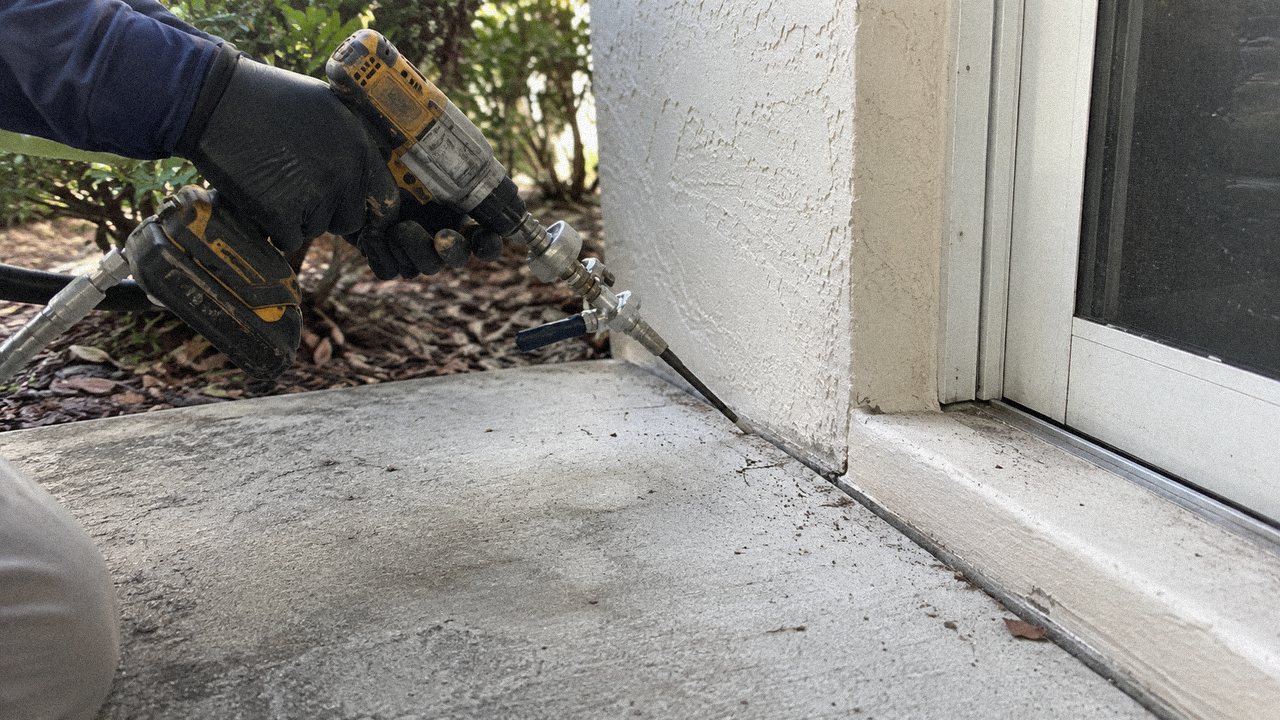
- Liquid soil termiticides. The EPA lists soil-applied barrier treatments as the most common approach. Products are applied to the soil along the foundation or injected through drilled holes in the slab. UF/IFAS notes that non-repellent liquids protect the treated structure but are unlikely to eliminate colony activity nearby. Read more in all you need to know about termite ground treatment.
- Termite baits. Stations around the house hold cellulose bait with a slow-acting ingredient. Workers share it with the colony, and the colony dies as termites fail to molt; for Formosan termites, UF/IFAS puts colony elimination at about 3 months.
- Direct wood treatment. FDACS describes termiticides applied directly to the bottom third of the wood framing during construction.
Tenting is not an option here. UF/IFAS points out that fumigation is ineffective against subterranean termites because colonies outside the tent can move right back in.
Need help with pests in South Florida?
Toro Pest Management has protected homes and businesses since 1969. Get a free inspection and $25 off your first service, backed by our 110% Satisfaction Guarantee: if the pests come back, so do we, at no extra cost.
How Professionals Treat Drywood Termites
Drywood termites never need soil, so soil treatments do nothing for them (UF/IFAS). Treatment targets the wood.
- Local or spot treatments for small, accessible infestations such as a door frame or a piece of furniture: termiticide injections, dusts or foams applied into the galleries, or replacing the infested wood. Products must be non-repellent, or the termites avoid them.
- Whole-structure treatments for widespread or inaccessible infestations: tent fumigation, usually with sulfuryl fluoride, or heat. UF/IFAS notes that fumigation leaves no residue, but occupants must leave and it is a specialized process that requires experts.
The catch with spot treatments is coverage. UF/IFAS warns that if the whole colony is not exposed, survivors can re-establish the infestation. That is why an inspector decides between local and whole-structure treatment based on how far the colonies have spread, not on preference.
| Subterranean termites | Drywood termites | |
|---|---|---|
| Where the colony lives | Soil, wall voids, hollow trees | Inside dry wood: framing, trim, furniture |
| What gives them away | Mud tubes, swarms, soil in damaged wood | Pellet piles, kick-out holes, swarms |
| Main treatments | Baits, liquid soil termiticides | Local injections, tent fumigation, heat |
| Does tenting work? | No | Yes, for widespread infestations |
| Do soil treatments work? | Yes | No |
| Biggest challenge | Huge colonies far from the house | Finding every hidden colony |
Why DIY Termite Treatment Usually Fails
Most homeowner attempts fail for the reasons above: the product never reaches the colony. A few more problems make it worse:
- Wrong product, wrong termite. A spray or soil drench does nothing for drywood termites, and a spot foam does nothing for a subterranean colony under the yard.
- Not enough coverage. Soil treatments depend on continuous coverage around the whole foundation, which takes equipment and access that most homeowners do not have.
- Products that do not protect. The EPA warns that products that only claim to kill termites have not demonstrated the ability to protect structures, and that a product without directions to control termites and protect the structure should not be used for that purpose.
- Lost time. Each failed attempt gives the colony more months to feed. See how delaying termite treatment can ruin your home.
What You Can Do to Make Treatment Work
Homeowners play a real part in a successful termite treatment, even if they do not apply it:
- Fix moisture. FDACS warns that moisture sources can break down chemical barriers; repair leaks and aim sprinklers away from walls.
- Keep the foundation visible. Thin mulch near the house and leave a clear strip so new tubes show up.
- Do not disturb bait stations or treated soil, and tell your company before landscaping or adding a patio.
- Watch for new evidence. New pellets, tubes or swarmers after treatment are a reason to call back.
- Keep up inspections. Our guide to where termite inspectors look shows the areas worth checking.
Choosing a Termite Treatment Company
Because treatment is technical, the company matters. The EPA advises checking that the firm is licensed by your state and asking to see the license; you can also ask for a copy of the product label and when it is safe to re-enter. FDACS adds that Florida termite contracts come with one of three warranty types (retreatment only, retreatment and repair, or spot or no warranty), so read what you are buying.
At Toro, every termite control job starts with a free inspection by a trained technician who identifies the species and checks how far the damage goes. Subterranean termites are treated with the Sentricon baiting system, installed around the property with no drilling into the slab and no trenches. Localized drywood colonies can be treated with TORO-GUARD, a non-tenting injection treatment, and drywood infestations that have spread through the structure are treated with tent fumigation. Technicians are trained at the TORO Institute with on-staff entomologists, and the work is backed by the 110% Satisfaction Guarantee.

Contact Toro today
A free inspection & $25 off your first service
A trained Toro technician inspects your home or business, explains what was found and gives you a clear plan and quote, backed by our 110% Satisfaction Guarantee.
305-594-4767Frequently Asked Questions
Can you get rid of termites for good?
Can I treat termites myself?
Which termites are hardest to get rid of?
How do I know the termite treatment worked?
Do I have to leave my house for termite treatment?
Sources
- Termites: How to Identify and Control Them, U.S. Environmental Protection Agency
- Drywood and Dampwood Termites (EDIS ENY-211), UF/IFAS Extension
- Formosan Subterranean Termite, Coptotermes formosanus (EDIS IN278), UF/IFAS Extension
- Termite Season: UF/IFAS Scientist Answers Common Questions, Corrects Misconceptions, UF/IFAS News
- West Indian Drywood Termite, Cryptotermes brevis (EDIS IN236), UF/IFAS Extension
- Protecting Yourself and Your Property Against Subterranean Termites, Florida Department of Agriculture and Consumer Services
Educational content. This article is for general information about pests in South Florida and is not medical, legal or professional advice. If you have a bite, sting or allergic reaction, contact your doctor; in an emergency, call 911. Pest problems vary from home to home, so a licensed professional should inspect before treatment. When using any pesticide, always read and follow the product label.


