
Key takeaways
- Pressure-treated wood resists termites, but UF/IFAS says treated wood does not guarantee permanent protection.
- Cut ends, drilled holes and poorly penetrated lumber expose untreated wood that termites can reach.
- Subterranean termites can build mud tubes across treated lumber and concrete to reach untreated framing above.
- Use lumber rated for its job: above-ground boards in the soil decay and lose protection sooner.
- Never burn treated wood, and wear a dust mask, goggles and gloves when cutting or sanding it, as the EPA advises.
In this article
- What Is Pressure-Treated Wood?
- Can Termites Eat Pressure-Treated Wood?
- How Termites Get Past Treated Lumber
- Subterranean vs. Drywood Termites and Treated Wood
- Where Treated Wood Meets Termites Around South Florida Homes
- How to Make Treated Wood Last Longer
- Protecting the Whole House, Not Just the Lumber
- Frequently Asked Questions
Yes, termites can damage pressure-treated wood, although they are much less likely to eat it than untreated lumber. The preservative makes wood termite-resistant, not termite-proof: UF/IFAS notes that treated wood can provide protection against decay and termite damage, but there is no guarantee of permanent protection.
In practice, termites get to treated wood through its weak spots: cut ends, drilled holes, lumber the preservative never fully penetrated and boards that stay wet. Subterranean termites can also simply travel over treated wood to reach the untreated framing behind it. Here is how that happens, where it matters most around a South Florida home and what you can do about it.
What Is Pressure-Treated Wood?
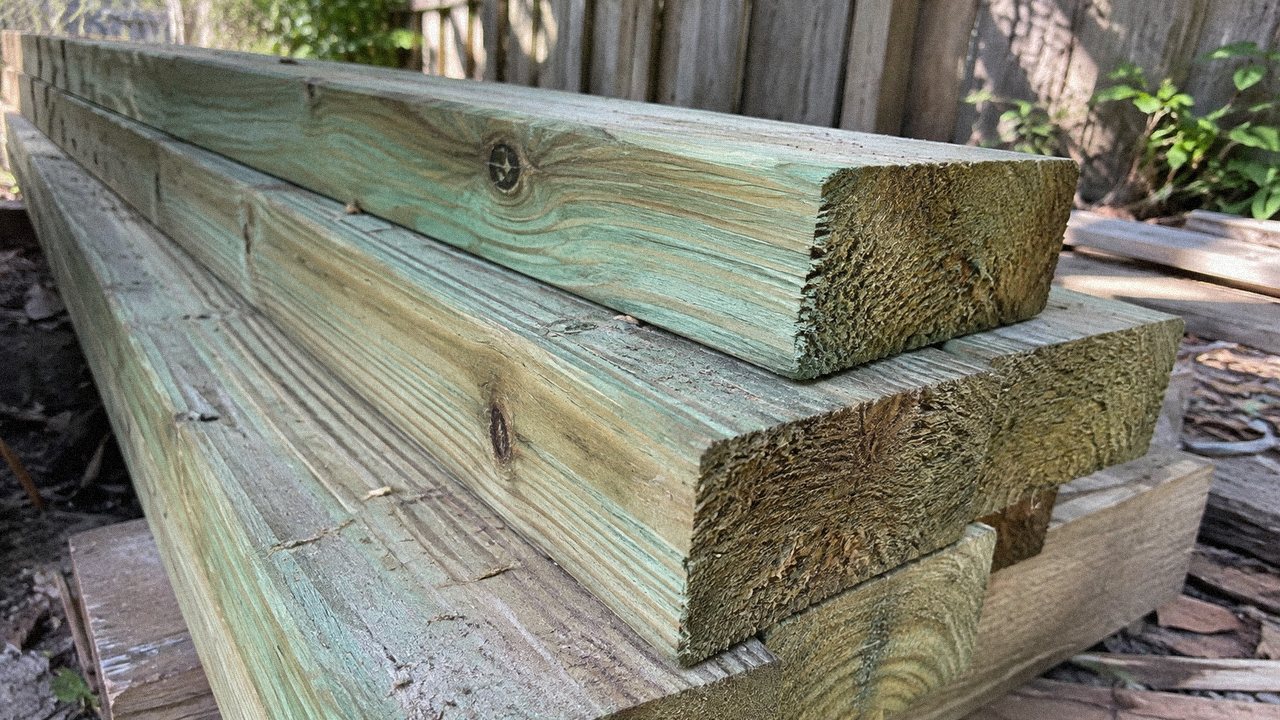
Pressure-treated lumber is wood that has been placed in a sealed cylinder where pressure forces a liquid preservative deep into the wood. The goal is to protect it from decay fungi and wood-destroying insects, so it can be used outdoors, near the ground or in contact with soil and water.
The chemistry has changed over the years. For decades the most common preservative was chromated copper arsenate (CCA). In 2002 the EPA announced that manufacturers would stop using CCA for virtually all residential uses, including decks, play structures, picnic tables, fencing, landscaping timbers and walkways, by the end of 2003. Today’s residential lumber is usually treated with copper-based preservatives such as ACQ, which an LSU AgCenter and USDA Forest Service guide describes as a widely used alternative to CCA in residential applications, or copper azole. Borates are another option, often used on framing during construction.
Use Categories: Not All Treated Lumber Is the Same
Treated wood is sold for different exposures, and each level carries a different amount of preservative. The LSU AgCenter and USDA guide lists these common use categories:
| Use category | Exposure | Typical examples | Termite and decay takeaway |
|---|---|---|---|
| UC3 | Above ground, outdoors | Deck boards, railings, fence boards | Not meant to touch soil; decays faster if buried or kept wet |
| UC4 | Ground contact | Fence posts, deck posts, landscape timbers | Higher retention for soil and constant moisture |
| UC5 | Marine | Docks, piers, seawall timbers | Highest retention for constant water exposure |
The label or end tag tells you which category you bought. Using an above-ground board where a ground-contact one belongs is one of the most common reasons treated wood fails early.
Can Termites Eat Pressure-Treated Wood?
Termites can feed on treated wood, but the preservative makes it a poor food source, so they usually prefer untreated wood nearby. UF/IFAS notes that CCA-treated wood deters drywood termites, and research on borax-copper treatments by the USDA Forest Products Laboratory found good protection against Formosan subterranean termites in Southern Pine.
The same USDA study also shows the limits. In Douglas-fir, protection was variable at every level tested, which the researchers attributed to lower retentions and uneven preservative distribution in the wood. Their conclusion: borax-based treatments can protect adequately in wood that allows uniform distribution of the preservative. Treated lumber is only as protective as the preservative inside it, and that is never perfectly even.
Need help with pests in South Florida?
Toro Pest Management has protected homes and businesses since 1969. Get a free inspection and $25 off your first service, backed by our 110% Satisfaction Guarantee: if the pests come back, so do we, at no extra cost.
How Termites Get Past Treated Lumber
Most termite damage involving treated wood happens in one of these ways.
Cut Ends, Notches and Drilled Holes
Preservative does not always reach the center of a board. Lumber with a lot of heartwood, or wood that was not properly seasoned, is harder to treat, according to the LSU AgCenter and USDA guide. Every time a board is cut to length, notched or drilled for a bolt, wood the preservative may not have reached is exposed. Those spots are where decay and insects get started.
Mud Tubes Over the Top
Subterranean termites do not need to eat treated wood to get past it. Workers build mud shelter tubes from the soil up foundation walls and across surfaces they cannot or will not eat, including concrete and treated lumber, to reach untreated wood. A treated sill plate on a slab protects that one board, not the untreated studs, trusses, cabinets and trim above it.
When Florida’s statewide building code took effect in 2002, a University of Florida report noted that the only wood it required to be treated was the sill plate resting on the slab. The same report noted that coating the bottom of wall studs with borate had not been proven to prevent damage, because termites can enter at the base of a stud and move upward through its center.
Wet, Decaying Wood
Moisture is the termite’s best friend. The LSU AgCenter and USDA guide notes that subterranean termites need wood with a moisture content above 20 percent. Treated boards that sit in standing water, under sprinkler spray or in damp mulch stay wet, decay more quickly and become more attractive. Above-ground lumber buried in soil is the classic failure.
Subterranean vs. Drywood Termites and Treated Wood
South Florida has both main types of structural termites, and they test treated wood in different ways.
- Subterranean termites, including the Formosan, Asian and eastern species, live in the soil and need moisture. They are the main threat to posts, fence boards, deck framing and sill plates near the ground. Our termite pest library explains each species.
- Drywood termites live entirely inside dry, above-ground wood and do not need soil. UF/IFAS notes that the West Indian drywood termite prefers sapwood and can be moved in furniture and other wooden items. Treated lumber is a poor target for them, but untreated trim, rafters, doors and furniture are not. Learn more on our drywood termite page.
The difference also decides the treatment, which is why identification comes first. Our article on drywood vs. subterranean termites covers the signs of each.
Where Treated Wood Meets Termites Around South Florida Homes
Treated lumber is everywhere around local homes, and some spots deserve extra attention during the rainy season, roughly May through October, when soil and wood stay wet for weeks.
- Fence posts and gate posts set directly in soil, especially along irrigated hedges
- Deck and pergola posts and the beams and joists resting on them
- Docks and seawall timbers on canal and waterfront properties
- Landscape timbers and raised garden beds filled with damp soil next to the house
- Wood steps, ramps and trellises that touch both the ground and the house wall
- Sill plates on block homes where stucco, soil or mulch has crept up the wall
That last point is a common way termites reach a house unseen. Landscaping that buries the bottom of the wall hides mud tubes and keeps the wood damp. Our guide to how landscaping choices attract termites shows what to change.
How to Make Treated Wood Last Longer
Treated lumber is still the right choice outdoors in South Florida. Some protection is far better than none. These steps help it do its job:
- Buy the right category. Use ground-contact lumber for anything touching soil, and marine-rated lumber for docks and seawalls.
- Treat cuts and holes. The LSU AgCenter and USDA guide notes that cuts and holes can be treated in the field with copper naphthenate. Field treatment penetrates much less than factory treatment, so place cut ends up and away from soil when you can.
- Keep wood dry. Aim sprinklers away from posts and walls, slope soil away from the house and fix gutters and downspouts.
- Break wood-to-soil contact. Set posts on concrete footings or brackets where possible, and keep mulch, soil and stored lumber off wood that touches the house.
- Leave an inspection gap. A clear strip at the foundation lets you see mud tubes before they reach the framing.
- Inspect yearly. Check posts, stairs, deck framing and any wood in shade or near sprinklers.
Protecting the Whole House, Not Just the Lumber
Treated wood protects the boards that contain preservative. It does not stop a termite colony living in the soil from foraging toward the rest of your home, which is why many South Florida homes with treated sills and fences still end up with termites. Common habits that make the problem worse are covered in 6 things you could be doing to attract termites.
Toro’s termite control starts with a free inspection: a trained technician identifies the species and checks how far any damage goes. For subterranean termites, Toro installs the Sentricon baiting system around the property, with no drilling into the slab and no trenches. Termites carry the bait back to the colony, which is designed to eliminate it, including the queen, and the stations stay in place for year-round protection. Drywood termites are handled differently, with TORO-GUARD injection for localized colonies or tent fumigation when they have spread through the structure.

Contact Toro today
A free inspection & $25 off your first service
A trained Toro technician inspects your home or business, explains what was found and gives you a clear plan and quote, backed by our 110% Satisfaction Guarantee.
305-594-4767Frequently Asked Questions
How long does pressure-treated wood last against termites?
Is borate-treated wood better against termites?
Is pressure-treated wood safe to use around my home?
Should I treat the cut ends of pressure-treated lumber?
Do termites eat plywood and OSB?
Sources
- Formosan Subterranean Termite, Coptotermes formosanus (EDIS IN278), UF/IFAS Extension
- West Indian Drywood Termite, Cryptotermes brevis (EDIS IN236), UF/IFAS Extension
- Causes and Control of Wood Decay, Degradation & Stain (Publication 2703), LSU AgCenter and USDA Forest Service
- Resistance of Borax-Copper Treated Wood in Aboveground Exposure to Attack by Formosan Subterranean Termites, USDA Forest Service, Forest Products Laboratory
- Manufacturers to Use New Wood Preservatives, Replacing Most Residential Uses of CCA, U.S. Environmental Protection Agency
- UF Termite Expert: New Building Code Will Help Stop Pest, University of Florida News
Educational content. This article is for general information about pests in South Florida and is not medical, legal or professional advice. If you have a bite, sting or allergic reaction, contact your doctor; in an emergency, call 911. Pest problems vary from home to home, so a licensed professional should inspect before treatment. When using any pesticide, always read and follow the product label.


