
Key takeaways
- Leaks and AC condensate that keep soil or wood damp are the habit most likely to invite subterranean termites.
- At University of Georgia test sites, 83% of termite infestations came in through expansion joints, so cracks and joints deserve attention.
- Cardboard boxes, paper and wood stored on a garage slab are termite food, not just clutter.
- Never move furniture with drywood termite pellets into other rooms before it has been inspected and treated.
- Keep siding, stucco and foam board 6 to 8 inches above the soil so mud tubes cannot climb out of sight.
In this article
- Why Everyday Habits Matter to Termites
- 1. Ignoring Leaks and Dripping AC Lines
- 2. Leaving Cracks and Joints Unsealed
- 3. Piling Mulch Against the Foundation
- 4. Letting Plants, Siding and Foam Board Touch the Soil
- 5. Storing Cardboard, Paper and Wood on the Floor
- 6. Neglecting Gutters, Downspouts and Sprinklers
- What to Do if You Already See Signs
- Frequently Asked Questions
Most termite problems start with ordinary habits: a slow leak nobody fixed, a crack in the slab left open, mulch piled against the wall, shrubs grown over the foundation, boxes stored on the garage floor and gutters that never get cleaned. None of these feels like an invitation, but together they give termites the moisture, food and hidden access they need.
The good news is that every one of these habits can be changed, and most cost little or nothing. Below are the six that matter most in South Florida homes, why each one helps termites and exactly what to do instead.
Why Everyday Habits Matter to Termites
Subterranean termites, the kind that nest in soil and travel through mud tubes, need moisture to survive. UF/IFAS advises fixing leaks, air conditioning condensate and other spots where moisture collects, and notes that termites can enter through small cracks or joints in the foundation or by building shelter tubes up the foundation wall.
Drywood termites follow different rules. They live inside dry wood with no soil contact and can travel in infested furniture, frames and trim. A couple of the habits below matter mainly for them.
| Habit | Main termite it helps | What it provides |
|---|---|---|
| Ignoring leaks and condensate | Subterranean | Moisture in soil and wood |
| Leaving cracks and joints unsealed | Subterranean | Hidden entry points |
| Piling mulch against the house | Subterranean | Moist soil, hidden mud tubes |
| Letting plants and siding touch the soil | Subterranean | Concealed routes to the wall |
| Storing cardboard and wood on the slab | Both | Food next to entry points |
| Neglecting gutters and drainage | Subterranean | Wet foundation soil |
1. Ignoring Leaks and Dripping AC Lines
A small leak under a sink, a sweating pipe in the wall or an AC condensate line that drips onto the soil can keep wood and the ground next to it wet for months. That is exactly the environment subterranean termites look for, and wet wood is also easier for them to eat: Mississippi State University Extension notes that moisture and wood-decay fungi make wood more vulnerable.
FDACS warns that an unrepaired leaking pipe or foundation crack can invite termites into your home, and that moisture can break down chemical barriers in the soil.
What to do instead:
- Check under kitchen and bathroom sinks, behind the washer and around the water heater every few months.
- Make sure the AC condensate line drains away from the foundation, not into the soil against the wall.
- Fix roof leaks and stains on ceilings or around windows promptly.
- Caulk around windows, doors and seams to limit water getting into the walls, as FDACS recommends.
Water stains and soft wood can look like termite damage, and sometimes they are both. Our guide to water damage vs. termite damage explains how to tell them apart.
Need help with pests in South Florida?
Toro Pest Management has protected homes and businesses since 1969. Get a free inspection and $25 off your first service, backed by our 110% Satisfaction Guarantee: if the pests come back, so do we, at no extra cost.
2. Leaving Cracks and Joints Unsealed
Termites rarely need a big opening. When University of Georgia researchers looked at how termites got into buildings at their test sites, almost all of them used joints and cracks.
Source: University of Georgia CAES
The same researchers found that termites are not random about it: they use the same entry points again and again. FDACS adds that large settlement cracks in a concrete slab give subterranean termites access, and treating them may mean lifting flooring and drilling.
What to do instead:
- Have large or widening slab cracks evaluated rather than covering them with new flooring.
- Seal gaps around plumbing and electrical penetrations where they pass through the slab or walls.
- Keep the bottom edge of the walls visible inside the garage so you can spot mud tubes at the joints.
3. Piling Mulch Against the Foundation
Deep mulch is a habit that comes back with every landscaping refresh. UF/IFAS research shows that termites survive poorly in chipped mulch itself, so the real issue is different: a thick layer keeps the soil moist and hides the foundation, which helps the termites already living on your property and keeps you from seeing them.
UF/IFAS recommends a thin layer, under 2 inches, within 12 inches of the foundation and about a 6-inch inspection space next to it. We cover the science, including why gravel is not automatically better, in 4 reasons why termites are attracted to your home.
4. Letting Plants, Siding and Foam Board Touch the Soil
Shrubs pressed against the house, vines on the stucco and soil built up against the wall all hide the foundation and keep it damp. Construction details can do the same thing out of sight.
FDACS points out that siding or stucco that reaches the soil lets termites build mud tubes where you cannot see them, and that foam board insulation touching soil gives termites an entry point and holds moisture. Both should stop 6 to 8 inches above the soil. Homes built close to grade put the sill plate at risk, so FDACS recommends re-establishing grade 6 to 8 inches below the slab and sloping the yard away from the house.
What to do instead:
- Trim shrubs so there is space between them and the wall, and keep vines off the house.
- Do not add soil, sod or rock that raises the grade against the stucco.
- Ask your builder or a contractor about siding, stucco or foam board that runs into the ground.
5. Storing Cardboard, Paper and Wood on the Floor
Clutter is not just a housekeeping issue. Termites eat any cellulose, and Mississippi State University Extension lists books, cardboard and paper alongside wood. A stack of moving boxes on a garage slab sits right on top of the joints termites use to get in.
Drywood termites add another risk. They live inside wood, and UF/IFAS notes that the West Indian drywood termite was once nicknamed the “furniture termite” because colonies were so often found in furniture. Bringing home used furniture, frames or wood décor without checking it, or moving an infested piece into another room, can spread them. Read how drywood termites sneak into homes through furniture and trim for what to look for.
What to do instead:
- Store boxes and papers in plastic bins on shelves, off the floor and away from walls.
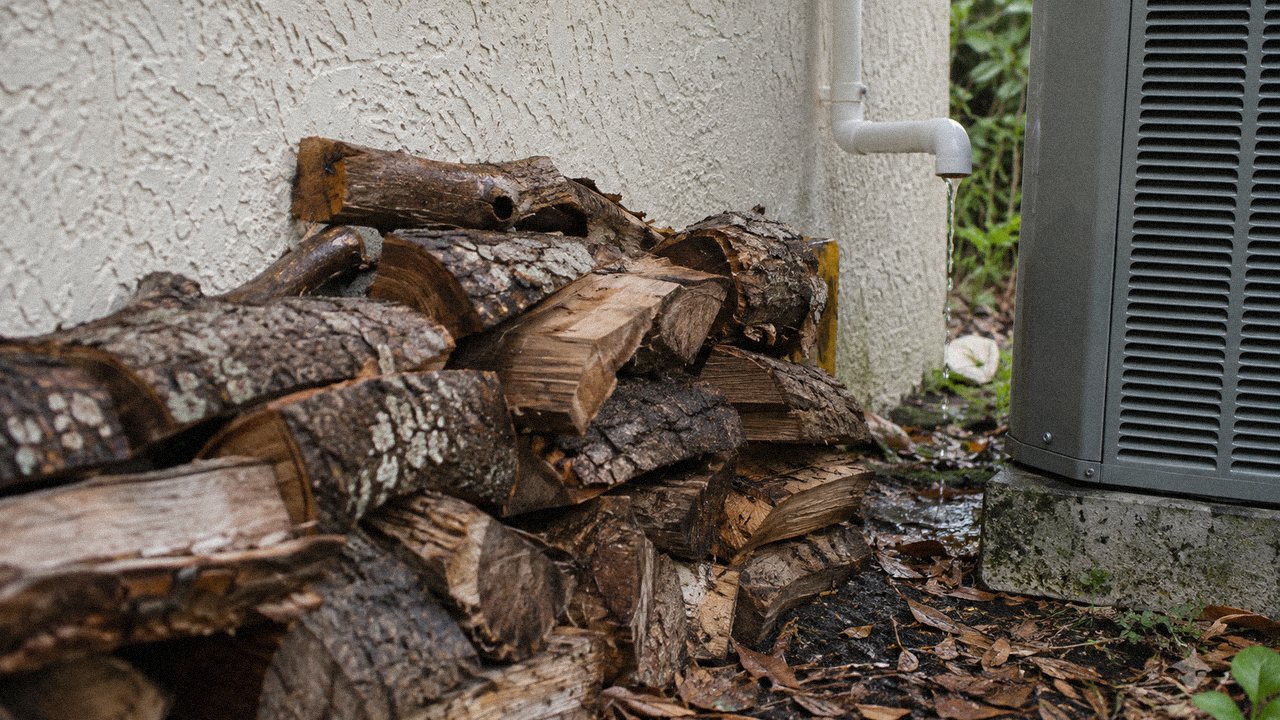
- Keep lumber and firewood out of the garage and off the ground.
- Inspect used wooden furniture for small piles of hard pellets and tiny holes before bringing it inside.
- If you find pellets under a piece, leave it where it is and have it inspected.
6. Neglecting Gutters, Downspouts and Sprinklers
Clogged gutters overflow down the wall, short downspouts dump rainwater at the slab and sprinklers soak the stucco every morning. In the South Florida rainy season, roughly May through October, that adds up to foundation soil that never dries.
UF/IFAS notes that the Florida building code requires irrigation to be installed at least 1 foot from a building sidewall, and that irrigation that wets walls is considered a conducive condition that can void termite control warranties.
What to do instead:
- Clean gutters before and during the rainy season.
- Add downspout extensions or splash blocks to carry water away from the foundation.
- Adjust sprinkler heads after every landscaping job so they do not hit the walls.
What to Do if You Already See Signs
Changing these habits lowers your risk, but it will not remove termites that are already feeding. If you find mud tubes, swarmers, piles of wings or small pellets, leave the evidence in place, take photos and get an inspection. For a broader checklist, read what a homeowner can do to prevent termites, and compare the species on our termite pest library or drywood termite pages.
Toro has been protecting South Florida homes since 1969. Our termite control service starts with a free inspection that identifies the species and how far it has spread, then recommends the right option: Sentricon baiting for subterranean termites, TORO-GUARD non-tenting treatment for localized drywood colonies or tent fumigation when drywood termites have spread through the structure.

Contact Toro today
A free inspection & $25 off your first service
A trained Toro technician inspects your home or business, explains what was found and gives you a clear plan and quote, backed by our 110% Satisfaction Guarantee.
305-594-4767Frequently Asked Questions
Can termites come in through the garage?
Will sealing cracks keep termites out?
Do termites like humid houses?
Can termites spread from one piece of furniture to another?
Sources
- Termite Behavior, University of Georgia CAES Newswire
- Protecting Yourself and Your Property Against Subterranean Termites, Florida Department of Agriculture and Consumer Services
- Native Subterranean Termites: Reticulitermes flavipes, R. virginicus, R. hageni (EDIS IN369), UF/IFAS Extension
- The Facts About Termites and Mulch (EDIS IN651), UF/IFAS Extension
- Termite Biology: Eastern Subterranean Termites and Formosan Termites, Mississippi State University Extension
- Cryptotermes Drywood Termites (Featured Creatures EENY-279), UF/IFAS Extension
Educational content. This article is for general information about pests in South Florida and is not medical, legal or professional advice. If you have a bite, sting or allergic reaction, contact your doctor; in an emergency, call 911. Pest problems vary from home to home, so a licensed professional should inspect before treatment. When using any pesticide, always read and follow the product label.


