
Key takeaways
- Termite galleries contain soil (subterranean) or hard six-sided pellets (drywood); rotted wood shows cracking, crumbling or stringy fibers instead.
- Wood decay needs wet wood: a USDA Forest Products Laboratory paper puts the line at about 20% moisture content, with decay above 30%.
- Brown rot leaves dark, crumbly wood with cube-like cracks; white rot leaves bleached, spongy or stringy wood (WSU Extension).
- The two problems often travel together, because leaks and damp wood favor both decay fungi and subterranean termites.
- A Florida WDO inspection covers both termites and wood-decaying fungi, so one visit can sort out which you have.
In this article
Water damage and termite damage are not the same, even though both can bubble paint, soften wood and make floors feel spongy. Termite damage is made by insects eating wood and leaves galleries, soil or pellets behind. Water damage is made by moisture and decay fungi and leaves stains, cracking, crumbling and a musty smell. The fix for one does nothing for the other.
The confusion is understandable, because the two often show up in the same place. Subterranean termites need moisture, and wet wood is easier for them to attack, so a slow leak can invite both problems at once. This guide shows you how to read the clues, what each problem needs to get started and what to do when you are not sure which one you have.
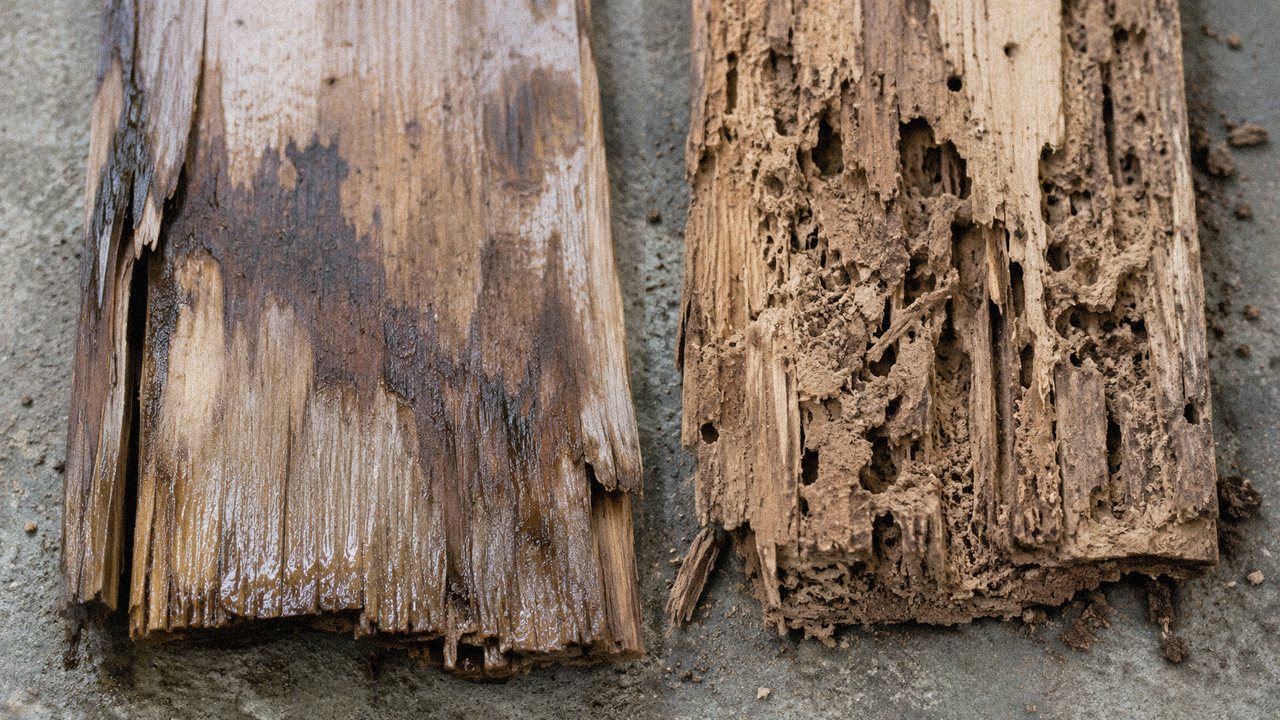
Why Water Damage and Termite Damage Look So Similar
From across the room, damaged wood is damaged wood. Both termites and rot can:
- Make paint blister, bubble or peel
- Leave wood soft enough for a screwdriver to sink in
- Cause floors to sag and doors or windows to stick
- Show up around windows, doors, bathrooms, kitchens and exterior walls
The overlap goes deeper than looks. Mississippi State University Extension notes that subterranean termites prefer moist wood and that moisture plus wood-decay fungi makes wood more susceptible to attack. In South Florida, where the rainy season runs from May to October and wind-driven rain can push water behind stucco and window frames, it is common to find a leak, some rot and termites in the same wall.
What Termite Damage Looks Like
Termites eat wood from the inside out, so the clues are inside the wood or right next to it.
Subterranean Termites
Subterranean termites leave soil behind. According to UF/IFAS, Formosan workers prefer the softer spring wood and leave galleries that follow the grain, and they often carry soil into those galleries. Other signs include:
- Mud tubes running up the foundation, a pipe or the inside of a wall
- Layered, hollowed wood with a thin outer shell
- Dirt or carton material (soil mixed with chewed wood) packed into cavities
- Live, cream-colored termites when the wood is opened
Drywood Termites
Drywood termites leave dry, clean damage. UF/IFAS describes galleries cut across the grain beneath a paper-thin surface layer, with small kick-out holes about 1 to 2 mm across. The giveaway is the pellets: hard, six-sided droppings in colors that include cream, red and black, piled below the infested wood. There is no moisture involved; drywood termites live in sound, dry lumber.
Need help with pests in South Florida?
Toro Pest Management has protected homes and businesses since 1969. Get a free inspection and $25 off your first service, backed by our 110% Satisfaction Guarantee: if the pests come back, so do we, at no extra cost.
What Water Damage and Wood Rot Look Like
Water by itself stains and swells wood. Real structural damage comes from decay fungi, which only grow when wood stays wet. Washington State University Extension describes the main types:
- Brown rot: most common in softwoods such as pine, the typical framing lumber. At advanced stages the wood turns darker brown, dry and fragile, and breaks into crumbly pieces with cracks across the grain that give a cube-like look.
- White rot: most common in hardwoods. It leaves a bleached, whitish area that is spongy or stringy.
- Soft rot: attacks from the surface inward where wood is often wet, and can weaken wood significantly early in the attack.
Mold and staining fungi also appear on wet wood. WSU notes they signal excess moisture but are less of a structural concern than rot. Other water clues include rings or stains, swelling and a musty smell.
How Wet Does Wood Have to Be to Rot?
Wetter than most people expect. A paper by researchers from Forintek Canada and the USDA Forest Products Laboratory states that wood will not decay below about 20% moisture content and will decay above 30%, with 20 to 30% a gray area. Decay fungi grow best at roughly 40 to 80% moisture content.
That is useful in practice: properly dried lumber indoors does not rot. Rot means a persistent water source, such as a roof leak, a failing window seal, a plumbing drip or soil and sprinklers against the wall.
Side-by-Side: How to Tell Them Apart
| Clue | Subterranean termites | Drywood termites | Water damage and rot |
|---|---|---|---|
| Inside the wood | Galleries along the grain, often with soil | Clean galleries across the grain | No tunnels; fibers crumble, crack or turn stringy |
| Debris | Mud, soil, carton material | Hard, six-sided pellets | Wet fibers, fungal growth, staining |
| Surface | Thin shell, blistered paint, mud tubes | Thin shell, tiny kick-out holes | Stains, swelling, peeling, cube-like cracks |
| Moisture | Usually nearby | Not needed | Always present or recent |
| Smell | Nothing typical | Nothing typical | Often musty |
| Living evidence | Cream-colored workers, soldiers | Termites inside the wood | Fungal growth on or in the wood |
If you see moisture and soil-filled galleries together, assume both a leak and subterranean termites until an inspection shows otherwise.
Where Each Problem Usually Starts
Location is another clue. In South Florida homes:
- Termites often show up where wood is close to soil or slab: door frames, baseboards on exterior walls, garage walls, wood near plumbing penetrations and anywhere mud tubes can climb. Drywood termites favor attic framing, window frames, trim and furniture.
- Water damage follows the water: under sinks and dishwashers, around toilets and tubs, below windows that leak in storms, along rooflines, near AC closets and wherever sprinklers hit the wall.
After a hurricane or tropical storm, both can begin at the same time. Water intrusion soaks framing, and wet wood becomes an easy target for subterranean termites. Our guide to termites after the storm covers what to check once the water is gone.
One Inspection Can Check for Both
In Florida, a wood-destroying organism (WDO) inspection looks for more than termites. The state’s official report form, FDACS-13645, defines wood-destroying organisms to include termites, powder post beetles, old house borers and wood-decaying fungi. The inspector records live organisms, evidence such as frass and shelter tubes, and visible damage.
Two limits are worth knowing. The report is based on a visual inspection of accessible areas, so finished walls, floor coverings, stored items and insulation can hide damage. And it states clearly that it is not a structural damage report; a qualified building contractor should judge whether framing needs replacing. For a look at the places inspectors check, read where termite inspectors look.
Many hidden infestations first appear as one of the silent signs of termites inside walls, such as blistered paint or hollow trim, which is exactly the kind of clue that gets mistaken for a leak.
What to Do Next
- Find and stop the water. Whether you have rot, termites or both, moisture makes everything worse. Fix leaks, redirect sprinklers and get water away from the foundation.
- Document the damage with photos and save any pellets, wings or insects in a sealed bag.
- Get the cause confirmed. UF/IFAS notes that mud tubes and damage suggest termite activity, but live termites are needed to confirm an active infestation.
- Treat before you repair. Replacing wood without stopping termites or drying out the area simply feeds the problem again.
- Check your coverage. Review your insurance policy and any termite contract before repairs begin.
If termites are part of the picture, Toro’s termite control service starts with a free inspection by a technician trained at the TORO Institute. Toro identifies the species and then recommends the right treatment: the Sentricon baiting system, installed in the soil with no drilling into the slab and designed to eliminate subterranean colonies, including the queen, or TORO-GUARD and tent fumigation for drywood termites. You can also learn more about the species on our termite pest library page.

Contact Toro today
A free inspection & $25 off your first service
A trained Toro technician inspects your home or business, explains what was found and gives you a clear plan and quote, backed by our 110% Satisfaction Guarantee.
305-594-4767Frequently Asked Questions
Does homeowners insurance cover water damage or termite damage?
Can wood rot attract termites?
Can a moisture meter tell termites from water damage?
Can termite-damaged or rotted wood be repaired instead of replaced?
Do drywood termites cause moisture problems?
Sources
- Formosan Subterranean Termite, Coptotermes formosanus (EDIS IN278), UF/IFAS Extension
- West Indian Drywood Termite, Cryptotermes brevis (EDIS IN236), UF/IFAS Extension
- Wood-Rotting Fungi, Washington State University Extension
- Limiting Conditions for Decay in Wood Systems, USDA Forest Products Laboratory
- Wood-Destroying Organisms Inspection Report (FDACS-13645), Florida Department of Agriculture and Consumer Services
- Termite Biology (Eastern Subterranean Termites and Formosan Termites), Mississippi State University Extension
Educational content. This article is for general information about pests in South Florida and is not medical, legal or professional advice. If you have a bite, sting or allergic reaction, contact your doctor; in an emergency, call 911. Pest problems vary from home to home, so a licensed professional should inspect before treatment. When using any pesticide, always read and follow the product label.


