
Key takeaways
- Standard homeowners policies typically list termites, insects and vermin among the losses they do not cover.
- Some policies include limited collapse coverage that can mention hidden insect damage, so read your own policy and ask your agent.
- In Florida, termite contracts come with retreatment-only, retreatment-and-repair or spot/no warranties (FDACS).
- A Florida WDO inspection report is not a guarantee that a home is free of termites or damage.
- Sprinklers that wet the walls and unrepaired leaks can void termite warranties, so maintenance protects your coverage.
In this article
- Why Homeowners Insurance Excludes Termite Damage
- When Insurance Might Help With Termite-Related Damage
- Termite Warranties: The Protection Most Florida Homeowners Rely On
- Termite Inspections When You Buy or Sell a Home
- How to Protect Your Home and Your Budget
- What to Do if You Find Termite Damage
- Frequently Asked Questions
In most cases, no. Standard homeowners insurance policies typically exclude damage caused by termites and other insects, so the cost of treatment and repairs usually falls on you. A few policies offer narrow exceptions, but you should never count on insurance to pay for termite damage.
That makes prevention and a good termite warranty far more valuable than most homeowners realize. This guide explains why insurers exclude termites, where the rare exceptions are, how Florida termite warranties and inspection reports work, and what you can do to protect your home and your budget.

Why Homeowners Insurance Excludes Termite Damage
Homeowners insurance is designed for sudden, accidental losses such as fire, windstorms or a burst pipe. Termite damage is the opposite: it builds slowly over months or years, and it can usually be prevented or caught early with inspections and treatment. Insurers treat it as a maintenance issue, like a worn-out roof.
You can see this in the policies themselves. The standardized homeowners policy summary published by the New Jersey Department of Banking and Insurance, for example, lists “termites, insects, rats, mice, birds or other vermin” among the losses the policy does not cover. Florida policies vary by company and form, but similar exclusions are common, so the only way to know is to read the exclusions section of your own policy.
Why the Damage Adds Up Without Coverage
Termites do their damage out of sight. UF/IFAS notes that subterranean termites account for about 80% of the money spent on termite control and repair in the United States, and that infestations are often discovered only during remodeling, when a paper-thin surface finally gives way. In South Florida, homes can face several destructive species at once, including Formosan, Asian and eastern subterranean termites and drywood termites. Our guide to how much damage termites cause shows what that damage looks like in a house.
When Insurance Might Help With Termite-Related Damage
The exceptions are narrow, and they depend entirely on your policy language.
Collapse Coverage
Some homeowners policies include a limited “collapse” coverage. In certain policy forms, the listed causes of a covered collapse include hidden insect or vermin damage, meaning damage you did not know about and could not reasonably see. A New York appeals court, for example, upheld coverage in a 2013 case where a policy covered collapse caused by hidden insect or vermin damage and the hidden insect damage had substantially impaired the structure. That is one case under one policy, not a rule. Settling, cracking and bulging are typically excluded, and you would need to show the damage was truly hidden.
Damage From a Separate Covered Event
If a covered peril, such as a windstorm, damages your home, that storm damage may be covered under your policy terms even if termites are also present. The termite damage itself is typically still excluded. Separating the two can be difficult, which is why documentation matters. Water damage and termite damage can also look alike; see water damage vs. termite damage to tell them apart.
Need help with pests in South Florida?
Toro Pest Management has protected homes and businesses since 1969. Get a free inspection and $25 off your first service, backed by our 110% Satisfaction Guarantee: if the pests come back, so do we, at no extra cost.
Termite Warranties: The Protection Most Florida Homeowners Rely On
Because insurance rarely covers termites, Florida homeowners protect themselves with a termite contract, often called a termite bond or warranty, from a licensed pest control company. According to FDACS, Florida termite warranties come in three types:
| Warranty type | What it covers if termites return | What to know |
|---|---|---|
| Retreatment only | The company retreats the home | Repairs to new damage are your cost |
| Retreatment and repair | Retreatment plus repair of new damage | Generally the more expensive option; check limits and conditions |
| Spot treatment or no warranty | Treatment of a specific area | No ongoing protection |
FDACS also notes that when a company provides a preventive treatment for new construction, it must issue a warranty that can be renewed annually for at least four additional years. Drywood and subterranean termites require different treatments, so make sure the contract names the termites it covers.
Questions to Ask Before You Sign
- Is the company licensed in Florida for termite work?
- Which termites does the contract cover: subterranean, drywood or both?
- Does it cover retreatment only, or retreatment and repair? Are there repair limits?
- What does the annual renewal include, and what happens if you miss it?
- Which conditions on your property could void the warranty?
- Is the warranty transferable if you sell the house?
Conditions That Can Void a Warranty
Your own maintenance affects your coverage. UF/IFAS points out that sprinklers that water the walls are considered a conducive condition that can void termite control warranties, and the Florida building code requires irrigation to be at least 1 foot from a building’s sidewall. FDACS warns that leaks and foundation cracks left unrepaired can invite termites and cause treatments to fail. Typical problem areas include:
- Irrigation spraying the walls or foundation
- Mulch piled high against the house (UF/IFAS recommends less than 2 inches within 12 inches of the foundation)
- Wood, debris or stored lumber touching the soil next to the home
- Unrepaired roof, plumbing and AC condensate leaks
- Siding, stucco or foam insulation that reaches the soil
Termite Inspections When You Buy or Sell a Home
In Florida, when a licensed company performs a wood-destroying organism (WDO) inspection for a real estate transaction, state law requires the findings on the state’s official form. The report must list visible evidence of termites, past infestations and treatments, any damage found, and the accessible areas that were not inspected and why.
Two details protect buyers who read carefully:
- The report is not a guarantee. The statute says an inspection report does not constitute a guarantee of the absence of wood-destroying organisms or damage.
- Look for the posted notice. After an inspection or treatment, a notice of at least 3 by 5 inches must be posted next to the attic or crawl space access or another readily accessible area. It tells you who inspected or treated the home and when.
Before closing, ask the seller for past termite treatment records and whether an active warranty can be transferred. For more on what happens during the visit, see what to expect during a termite inspection, and for the resale side, read termites and your home’s value.
How to Protect Your Home and Your Budget
Since insurance will not carry the risk, the goal is to find termites early and keep conditions that attract them under control.
- Read your policy. Find the exclusions and any collapse coverage, and ask your agent to clarify.
- Schedule regular inspections. FDACS calls annual inspections a must for older homes. Our article on how often you should get a termite inspection explains the right schedule for your home.
- Keep a termite contract active, and know exactly what it covers.
- Fix moisture problems quickly, especially after storms.
- Keep records. Save inspection reports, treatment records, photos and receipts in one place.
- Act on the first sign. Swarmers, discarded wings, mud tubes, pellet piles or blistered paint all deserve a prompt inspection.
Many of the most expensive surprises come from small, avoidable errors. Our list of common termite mistakes that cost homeowners thousands is a good checklist.
What to Do if You Find Termite Damage
- Do not disturb the area. Leave mud tubes and damaged wood in place so the inspector can confirm live activity and the species.
- Document everything. Take photos and notes with dates.
- Call your insurance agent if the damage involves a sudden collapse or a separate event like a storm or burst pipe, and ask how to file.
- Check your termite contract. If you have a warranty, contact the company right away and follow its claim process.
- Get a professional inspection to find out how far the termites have spread and which treatment is needed.
Toro Pest Management has protected South Florida homes since 1969. Our termite control service starts with a free inspection in which a trained technician identifies the species and checks how far the damage goes. Toro then recommends the right option, whether Sentricon baiting for subterranean termites, TORO-GUARD non-tenting treatment for localized drywood termites or tent fumigation, and backs the work with the 110% Satisfaction Guarantee. To learn more about the termites themselves, visit our termite library.
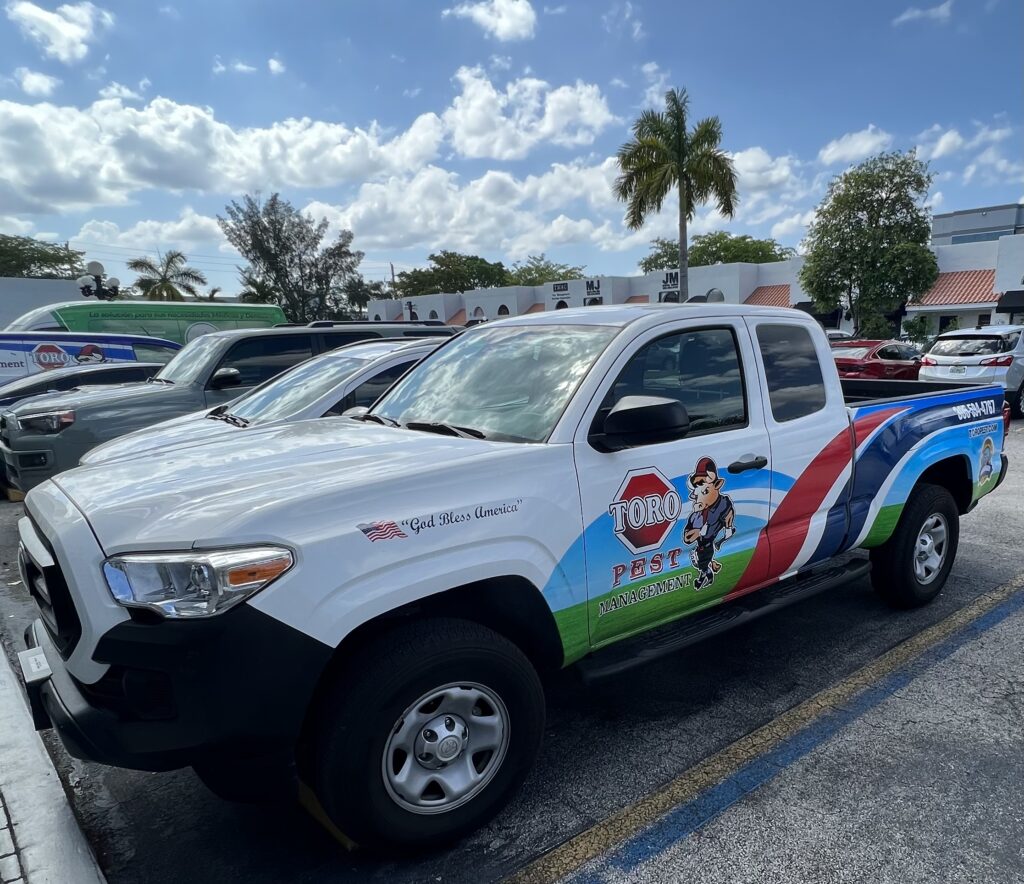
Contact Toro today
A free inspection & $25 off your first service
A trained Toro technician inspects your home or business, explains what was found and gives you a clear plan and quote, backed by our 110% Satisfaction Guarantee.
305-594-4767Frequently Asked Questions
Does homeowners insurance cover termite treatment?
Can I buy separate termite insurance?
Will my insurance pay if termites damage my home after a hurricane?
Should I get a termite inspection before buying a house in Florida?
Does renters or condo insurance cover termites?
Sources
- Homeowners Insurance Policy Summary (Exhibit A), New Jersey Department of Banking and Insurance
- Protecting Yourself and Your Property Against Subterranean Termites, Florida Department of Agriculture and Consumer Services
- Florida Statutes 482.226: Wood-Destroying Organism Inspection Report, The Florida Senate
- The Facts About Termites and Mulch (EDIS IN651), UF/IFAS Extension
- Native Subterranean Termites: Reticulitermes flavipes, R. virginicus, R. hageni (EDIS IN369), UF/IFAS Extension
- Decision on collapse coverage for hidden insect damage (2013 NY Slip Op 07226), New York State Unified Court System
Educational content. This article is for general information about pests in South Florida and is not medical, legal or professional advice. If you have a bite, sting or allergic reaction, contact your doctor; in an emergency, call 911. Pest problems vary from home to home, so a licensed professional should inspect before treatment. When using any pesticide, always read and follow the product label.


