
American cockroach
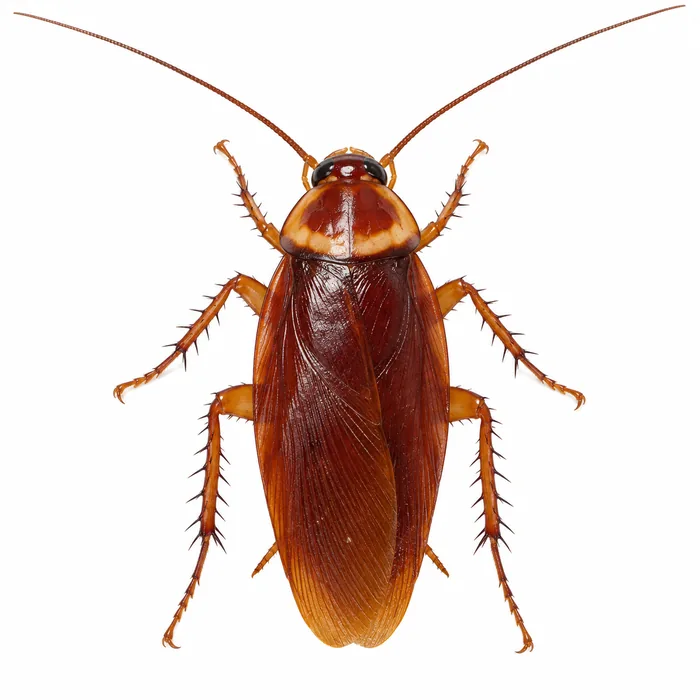
The American cockroach (Periplaneta americana) is the big reddish-brown roach most South Floridians call a palmetto bug. At about 1 1/2 inches long it is the largest of the common roaches around homes, and it lives in sewers, storm drains, mulch and tree holes, then wanders indoors through drains, gaps and open doors, especially in commercial buildings and after heavy rain.
- Since 1969Third generation, protecting South Florida
- 110% GuaranteeIf the bugs come back, so will Toro, at no additional cost
- Within 24 HoursResponse guaranteed
- Free InspectionPlus $25 off your first service
What Are American Cockroaches?
The American cockroach, Periplaneta americana, is the large reddish-brown cockroach that turns up in garages, bathrooms, kitchens and patios across South Florida, usually at night. Floridians call it a palmetto bug, and older names include water bug. Despite its name, it is not native to the United States. UF/IFAS reports that it was introduced from Africa as early as 1625 and has spread around the world through commerce.
In Florida, the American cockroach is found in buildings throughout the state, especially commercial buildings, and UF/IFAS ranks it second only to the German cockroach in abundance. It is a peridomestic cockroach, meaning it lives mainly outdoors and in sewers and drainage systems around buildings, and moves inside when it is looking for food, water or shelter.
South Florida’s climate suits it. This species prefers warm, moist, humid places between about 70°F and 85°F, which describes Miami-Dade, Broward, Palm Beach and the Keys for most of the year. Add a rainy season that runs from May through October, miles of storm drains and sewers, and lush landscaping full of mulch, palms and leaf litter, and you have ideal palmetto bug habitat.
This page goes deep on the American cockroach. For an overview of all the roaches found here, see our cockroach guide. If the roaches you see are small and live in your kitchen, read about the German cockroach instead, because it needs a different plan.
How to Identify American Cockroaches
- Size: The largest of the common cockroaches around homes, averaging about 4 cm (1 1/2 inches) long, with antennae about as long as the body.
- Color: Shiny reddish brown, with a pale brown or yellowish band around the edge of the pronotum, the shield behind the head.
- Wings: Adults of both sexes have full wings. In males, the wings extend about 1/8 to 1/3 inch past the tip of the abdomen.
- Nymphs: Wingless and reddish brown to dark brown; wing pads appear as they grow.
- Egg case: A hardened, purse-shaped capsule about 8 mm (1/3 inch) long, brown at first and turning black within a day or two.
- Odor: Virginia Cooperative Extension notes that American cockroaches produce a strong, unpleasant odor that can sometimes be noticed before the roaches are seen.
Palmetto Bug Look-Alikes: Smokybrown and Australian Cockroaches
Several large outdoor roaches share the palmetto bug name in South Florida. Telling them apart helps find where they are coming from.
| Species | Size and look | Where it lives |
|---|---|---|
| American cockroach (Periplaneta americana) | About 1 1/2 inches; reddish brown with a pale yellowish band around the edge of the shield behind the head | Sewers, storm drains, mulch, tree holes, attics; commercial buildings |
| Smokybrown cockroach (Periplaneta fuliginosa) | About 1 to 1 1/4 inches; uniformly dark mahogany brown to black, with no light markings | Tree holes, woodpiles and attics; a strong flier attracted to lights |
| Australian cockroach (Periplaneta australasiae) | About 1 1/4 inches; reddish brown to dark brown with a light yellow stripe along the outer edge of each front wing | Under bark, in firewood and damp areas; UF/IFAS calls it the most common outdoor cockroach in southern Florida |
| Florida woods cockroach (Eurycotis floridana) | 1.2 to 1.6 inches; reddish brown to nearly black, with only short wing pads, slow moving | Leaf litter, tree cavities, woodpiles and bases of palms; releases a smelly secretion when disturbed |
The quickest check: an American cockroach has a light band around the shield behind its head, an Australian cockroach has yellow stripes on the shoulders of its wings, and a smokybrown cockroach is one solid dark color.
Life Cycle and Behavior
American cockroaches develop slowly compared with German cockroaches, but they live a long time. According to UF/IFAS:
- About a week after mating, the female produces a hard, purse-shaped egg case holding 16 eggs.
- She deposits it near a food source, sometimes gluing it to a surface, instead of carrying it until it hatches. The egg case holds enough water for the eggs to develop on their own.
- On average she makes about one egg case a month for ten months, producing around 150 young in her lifetime.
- Nymphs hatch after about six to eight weeks, molt six to 14 times and take six to twelve months to mature.
- Adults can live up to about a year, and Virginia Cooperative Extension reports a year to a year and a half.
American cockroaches avoid light and are most active at night. During the day they rest in harborages close to water pipes, sinks, bathtubs and toilets. UF/IFAS notes that mass migrations are common and that individual sewer manholes can hold more than 5,000 cockroaches. They are omnivores that prefer sweets but will eat paper, bread, fruit, hair, dead insects and many other materials.
They also have natural enemies. A tiny parasitic wasp, Aprostocetus hagenowii, lays its eggs inside American cockroach egg cases and keeps the nymphs from emerging.
Signs of an American Cockroach Problem
- Large reddish-brown roaches running across the floor at night or coming out of floor drains, tubs and sinks
- Roaches in the garage, laundry room, utility room or attic
- Black egg cases glued in hidden corners, cabinets, garages and near food
- Droppings in cabinets, storage areas and along baseboards
- A strong, unpleasant odor in closed rooms or storerooms
- Roaches gathered around manholes, storm drains, dumpsters or loading docks outside
- More roaches indoors after heavy rain
Why American Cockroaches Are a Problem
UF/IFAS considers the American cockroach a public health problem because of its association with human waste and disease. It is found in sewers, cesspools, sewage treatment plants and dumps, then walks across counters, dishes and food. At least 22 species of pathogenic bacteria, viruses, fungi and protozoa, and five species of parasitic worms, have been isolated from field-collected American cockroaches, and they soil items with their feces and regurgitated food.
The EPA lists cockroaches among common asthma triggers, noting that droppings and body parts of cockroaches can trigger asthma and that proteins in cockroach feces and saliva can cause allergic reactions in some people. Keeping roaches out of living areas is a sensible part of managing asthma triggers at home.
Read more: Health risks of cockroaches in South Florida homes and The link between cockroaches and asthma.
For businesses, palmetto bugs are more than a nuisance. UF/IFAS notes that American cockroaches are common in restaurants, grocery stores, bakeries and anywhere food is prepared or stored. A single large roach seen by a customer or an inspector can hurt a restaurant, a hotel or a health care facility.
Where American Cockroaches Hide in South Florida Homes and Businesses
- Sewers and storm drains. The main reservoir. Roaches move from sewer lines into buildings through plumbing, floor drains and dry traps.
- Bathrooms and kitchens. Near water pipes, under sinks and tubs, behind toilets and in plumbing voids.
- Garages, laundry rooms and utility rooms. Warm, damp and full of boxes.
- Attics. UF/IFAS notes they are occasionally found under roof shingles and in attics.
- Landscaping. Thick mulch, pine straw, leaf litter, ivy, woodpiles, hollow trees and palm trees close to the house.
- Condos and high-rises. Trash rooms, chutes, garages, electrical rooms and shared plumbing.
- Restaurants, groceries and warehouses. Floor drains, grease traps, dumpsters, loading docks, basements and storerooms.
Even the cleanest homes get palmetto bugs, because the source is usually outside or in the plumbing. Read more: How cockroaches invade even the cleanest homes.
When American Cockroaches Are Most Active in South Florida
| Season | American cockroach activity | What to do |
|---|---|---|
| January to March (dry season) | Roaches move toward moisture during dry spells; activity continues in sewers and attics | Fix leaks, run water in unused drains and seal gaps around pipes. |
| April to May | Outdoor populations build as temperatures climb | Thin mulch, clear leaf litter and pull mulch back from the foundation. |
| May to October (rainy season) | Peak activity; heavy rain floods sewers and harborage and can push roaches indoors | Keep drain covers in place, close doors at night and check garages and laundry rooms. |
| June to November (hurricane season) | Flooding and storm debris move roaches and give them new shelter | Remove debris quickly and store food and garbage in sealed containers. |
How to Prevent American Cockroaches
- Seal entry points. Caulk wall penetrations at ground level, add door sweeps and weatherstripping, repair screens and seal gaps around pipes, wires and air conditioning lines.
- Close off drains. Screen or seal large openings around outside drain lines and sewer vents. Keep floor drains and unused sinks and showers filled with water so traps stay full, and keep drain covers in place.
- Remove moisture. Fix plumbing leaks, empty pans under refrigerators and do not overwater landscaping next to the house.
- Manage mulch. UF/IFAS recommends keeping only a thin layer of mulch and leaving about 1 foot next to the foundation clear so it can dry. Pine straw encourages heavy breeding.
- Clean up the yard. Remove leaf litter, trim shrubs and ivy away from the walls, stack firewood off the ground and away from the house, and fill tree holes.
- Store food and garbage well. Use sealed containers, keep garbage cans closed and empty sink strainers often.
- Reduce clutter. Clear boxes, bags, paper and magazines from garages and storerooms.
How Toro Gets Rid of American Cockroaches
- InspectionA Toro technician inspects drains, plumbing, the garage, attic, landscaping and the outside of your home or business to find where the palmetto bugs are coming from and how they get in.
- IdentificationWe confirm the species, because an American or smokybrown cockroach from outside needs a different approach than German cockroaches breeding in the kitchen.
- Targeted treatment and exclusionWe treat harborage outside and around the foundation, entry points and sheltered areas, and cracks and voids inside, using products chosen for the species and applied according to their label directions. We also recommend sealing and drain fixes that keep roaches from coming back in.
- Follow-upWe return to check results and treat new activity. Our 110% Satisfaction Guarantee means that if the bugs come back, so will Toro, at no additional cost to you.
Since 1969, Toro Pest Management has kept palmetto bugs out of South Florida homes and businesses, from Coral Gables and Hollywood to West Palm Beach and Key West. Our residential pest control protects houses, townhomes and condos, and our commercial pest control serves restaurants, warehouses and property managers. Our drain cleaning service also removes the food buildup in drains that attracts roaches and other pests. Call 305-594-4767 for a free inspection and $25 off your first service. Hablamos Español.
Seeing signs of american cockroach? Get a free inspection and $25 off your first service.
Schedule Your Free InspectionAmerican cockroach: Frequently Asked Questions
Is a palmetto bug the same as an American cockroach?
Usually, yes. Palmetto bug is a Florida nickname for large cockroaches that live mostly outdoors. UF/IFAS explains that the American, Australian, brown and smokybrown cockroaches are often called palmetto bugs, and the name is also used for the Florida woods cockroach. The American cockroach is the largest of the common ones around homes, reddish brown with a yellowish band behind the head.
Why do I see palmetto bugs in my house even though it is clean?
American cockroaches do not need a dirty house. They live in sewers, storm drains, mulch, tree holes and woodpiles, and UF/IFAS notes that they move indoors through plumbing from sewers and from trees and shrubs next to buildings. They wander in looking for food and water or to escape extreme weather, and indoor sightings can follow heavy rain.
Do American cockroaches fly?
Adults have full wings and occasionally fly, but Virginia Cooperative Extension describes them as awkward fliers that usually prefer to run. In males, the wings extend slightly past the tip of the abdomen. If a dark roach flies straight toward your porch light at night, it may be a smokybrown cockroach, a strong flier that is attracted to light.
Are palmetto bugs dangerous?
They do not sting and are not poisonous, but they are a sanitation concern. UF/IFAS reports that at least 22 species of disease-causing bacteria, viruses, fungi and protozoa, plus five kinds of parasitic worms, have been isolated from field-collected American cockroaches, and they soil items with feces and regurgitated food. The EPA lists cockroaches among common asthma triggers.
What attracts American cockroaches?
Moisture, warmth and food. They prefer warm, humid places between about 70 and 85 degrees Fahrenheit and rest near water pipes, sinks, bathtubs and toilets. They eat almost anything, from sweets, bread and fruit to paper, hair and dead insects. Thick mulch, leaf litter, woodpiles, leaky pipes, dry floor drains and garbage areas all draw them close to the house.
How do I keep palmetto bugs out of my house?
Seal the gaps they use: caulk around pipes and wires at ground level, add door sweeps, repair screens and screen or seal openings around drain lines and sewer vents. Keep floor drains and unused sinks filled with water, fix leaks, keep mulch thin and about 1 foot from the foundation, move firewood away from the house and store garbage in sealed containers.
Can I get rid of American cockroaches myself?
Often you can reduce them a lot with exclusion, moisture control and yard cleanup, because UF/IFAS notes that outdoor cockroaches do not survive well indoors and removing them may be all that is needed. If roaches keep coming up through drains, live in the attic or sewer, or infest a restaurant or apartment building, a professional inspection helps find and treat the source.
Related Pests
Pest Control Across South Florida
Toro treats american cockroach in homes and businesses throughout Miami-Dade, Broward and Palm Beach counties, including:
- Miami
- Hialeah
- Doral
- Miami Beach
- Coral Gables
- Homestead
- Fort Lauderdale
- Hollywood
- Pembroke Pines
- Miramar
- Boca Raton
- West Palm Beach
Last updated: October 29, 2026


110% Satisfaction Guaranteed
If the bugs come back, so will TORO at no additional cost to you. TORO will respond with in 24 hours Guaranteed. Our technician will arrive quickly and deal with the pest problem to prevent recurrence.

