
Key takeaways
- Many tiny dark ants in South Florida kitchens are white-footed ants or crazy ants, not true little black ants, and each responds to different baits.
- Spraying the trail kills only foragers; the queens stay hidden in the nest, so the ants return.
- Baits work slowly: expect more ants at the bait at first, fewer within about 5 to 10 days and full control in several weeks.
- White-footed ant colonies can hold from 8,000 to 3 million ants, with nests in palms, mulch, gutters and attics (UF/IFAS).
- Sealed food, quick cleanup, caulked entry points and trimmed shrubs keep new trails from forming.
In this article
- What Are Little Black Ants?
- Little Black Ant Look-Alikes in South Florida
- Why Sprays Make Little Black Ants Worse
- How to Get Rid of Little Black Ants Step by Step
- How to Keep Little Black Ants From Coming Back
- When to Call a Professional for Little Black Ants
- How Toro Gets Rid of Little Black Ants
- Frequently Asked Questions
To get rid of little black ants, you have to reach the colony, not just the trail on your counter. That means identifying the ant, following the trail back to where it enters, using a slow-acting bait the workers carry home and then closing the gaps and food sources that brought them in.
In South Florida, “little black ants” is a catch-all name. The tiny dark ants marching across a Miami or Fort Lauderdale kitchen may be true little black ants, but they are often white-footed ants or crazy ants, two species that behave differently and live in much bigger colonies. This guide shows you how to tell them apart, why sprays make the problem last longer, and a step-by-step plan that actually ends the trails.

What Are Little Black Ants?
The little black ant, Monomorium minimum, is a native North American ant. According to Texas A&M AgriLife, workers are about 1/16 inch long, shiny black and all the same size. Colonies are moderate to large, with up to about 2,000 workers, and a colony can contain many queens.
Outdoors, they nest in the soil of open lawns and under stones, bricks, wood and logs. Indoors, they nest in woodwork, wall voids, masonry and under carpets. When their numbers are high, they spread through a building and get into nearly every crack and crevice, and their trails are most visible in food cabinets and pantries.
They eat other insects and the sweet honeydew produced by aphids and other plant-sucking pests, which is why they take so readily to sugary spills, crumbs and syrups in your kitchen.
Little Black Ant Look-Alikes in South Florida
Before you buy any product, figure out which “little black ant” you have. A sweet bait that wipes out one species may be ignored by another. Our guide to ants in South Florida covers every common species; these are the small dark ones people mix up most.
| Ant | Size and color | Key clue | Where it nests |
|---|---|---|---|
| Little black ant | About 1/16 in, shiny black | All workers the same size, neat trails | Lawn soil, under stones and bricks, wall voids |
| White-footed ant | 2.5-3 mm, black to brownish-black | Pale yellowish-white feet | Palm fronds, trees, mulch, gutters, attics, wall voids |
| Crazy ant | 2.3-3 mm, dark brown to blackish | Very long legs and antennae, fast and erratic | Trash, plant cavities, rotten wood, soil, often far from where it feeds |
| Ghost ant | Under 2 mm, two-toned | Dark head, pale see-through abdomen | Wall voids, cabinets, potted plants |
White-Footed Ants
The white-footed ant is the one most likely to be behind a long, steady trail along a South Florida baseboard. UF/IFAS reports it was first collected in Florida at a Homestead nursery in 1986 and has since spread to many counties, including Miami-Dade, Broward, Palm Beach and Monroe, most likely on infested landscape plants.
Its colonies are huge, with estimates ranging from 8,000 to 3 million ants spread over connected nests. According to UF/IFAS, nests are more often outside than inside, in tree foliage, under palm fronds, in mulch, leaf litter and rain gutters, as well as in wall voids and attics. Trails can last for months, and indoors the ants follow wall-panel edges and electrical cables, which is why they sometimes show up in electrical outlets.
Crazy Ants
Crazy ants are easy to spot by the way they move: fast, jerky and seemingly without a trail. They have very long legs and antennae. They have no stinger but can bite and spray formic acid. UF/IFAS notes that their nests are often far from where they forage, and in summer they may prefer protein foods and ignore honey or sugar baits.
Need help with pests in South Florida?
Toro Pest Management has protected homes and businesses since 1969. Get a free inspection and $25 off your first service, backed by our 110% Satisfaction Guarantee: if the pests come back, so do we, at no extra cost.
Why Sprays Make Little Black Ants Worse
The ants you see are a small part of the colony. Queens and brood stay hidden in the nest, and they keep producing workers no matter how many you kill on the counter.
University of California IPM specialists put it plainly: spraying indoors will not prevent more ants from entering, and perimeter sprays kill foragers but not the colony, so numbers rebuild. Sprays have a second downside. Extension entomologists warn that insecticides and cleaners sprayed near bait stop ants from feeding on it, which undoes the one method that reaches the queens.
If you want a quick fix for a trail you can see, a soap-and-water spray kills ants on contact (UF/IFAS Extension), and wiping the trail with soapy water removes the scent ants follow. Just do it only where you are not baiting. Our article on what happens if you kill the queen ant explains why the colony, not the worker, is the real target.
How to Get Rid of Little Black Ants Step by Step
1. Collect a Few Ants
Pick up a few workers with clear tape or drop them in a sealed bag. Identification decides the bait. If you are not sure what you have, a professional can tell you in minutes.
2. Follow the Trail
Ants travel along lines and edges: baseboards, countertop seams, pipes, cables and window sills. The University of Kentucky suggests placing a small dab of honey or jelly on an index card near the ants and watching where they carry it. Trace the trail in both directions to find the entry point and, if possible, the nest.
3. Bait Where the Ants Are Feeding
Place bait right next to active trails without disturbing them. Gel baits and small stations work well indoors.
- Match the food. Ant preferences can switch between sugar, protein and grease from week to week. If ants ignore a bait, try a different type.
- Do not spray around the bait. Let the workers feed and carry it home.
- Expect a surge. You will often see more ants around the bait at first as workers recruit nestmates to it. That is a good sign.
- Keep it fresh. Replace baits that are empty or dried out, and remove them once the ants are gone, since baits without ants can attract them.
- Be patient. UC IPM says you may see fewer ants within about 5 to 10 days, with full control taking several weeks.
Always read and follow the label, and place baits out of reach of children and pets.
4. Clean Up Food and Water
Baits work best when they are the easiest meal around. Wipe up spills, especially sweet ones, rinse dishes you cannot wash right away and empty the sink strainer. UF/IFAS Extension points out that ants can get through cardboard and that screw-top jars need rubber seals, so store sugar, cereal, honey and pet food in truly airtight containers. Fix dripping faucets and dry out under-sink cabinets.
5. Seal the Entry Points
Once the trail is gone, caulk the gap where it came in. Start at the entry point you found and then work around baseboards, cabinets, pipes, sinks, toilets and outlets. Add weather stripping to doors and windows that leave a gap.
How to Keep Little Black Ants From Coming Back
South Florida’s warmth keeps ant colonies active all year, and heavy summer storms can push foragers indoors, as we explain in how ants migrate indoors during South Florida storms. Prevention is a habit, not a single project.
- Trim the bridges. White-footed ants enter on branches and shrubs that touch the house. Keep vegetation off walls and the roof, and trim overhanging trees so leaf nests do not fall onto the roof.
- Thin the mulch. Keep mulch beds thin and pulled back from the foundation, and remove stones, bricks and debris that ants can nest under.
- Control plant pests. Aphids, mealybugs, scales and whiteflies feed ants with honeydew. Fewer plant pests means fewer ants.
- Check plants at the door. Inspect the soil of new potted plants before you bring them inside.
- Manage trash. Bag garbage, rinse recyclables and keep outdoor bins closed.
For a full room-by-room routine, see our home ant prevention methods. If the small ants you find are coming out of cracks in the driveway or patio, read are pavement ants dangerous to see which species you are dealing with.
When to Call a Professional for Little Black Ants
Call a pest control company when:
- Trails are still active after several weeks of correct baiting
- Ants come from inside walls, outlets or the attic
- You see ants in several rooms at once, or in more than one unit of a condo
- You find nests in palms, trees or gutters that you cannot reach safely
- You are not sure which species you have
The University of Kentucky notes that professionals have more experience, a wider choice of products and better application equipment, which matters most against multi-nest species such as white-footed ants.
How Toro Gets Rid of Little Black Ants
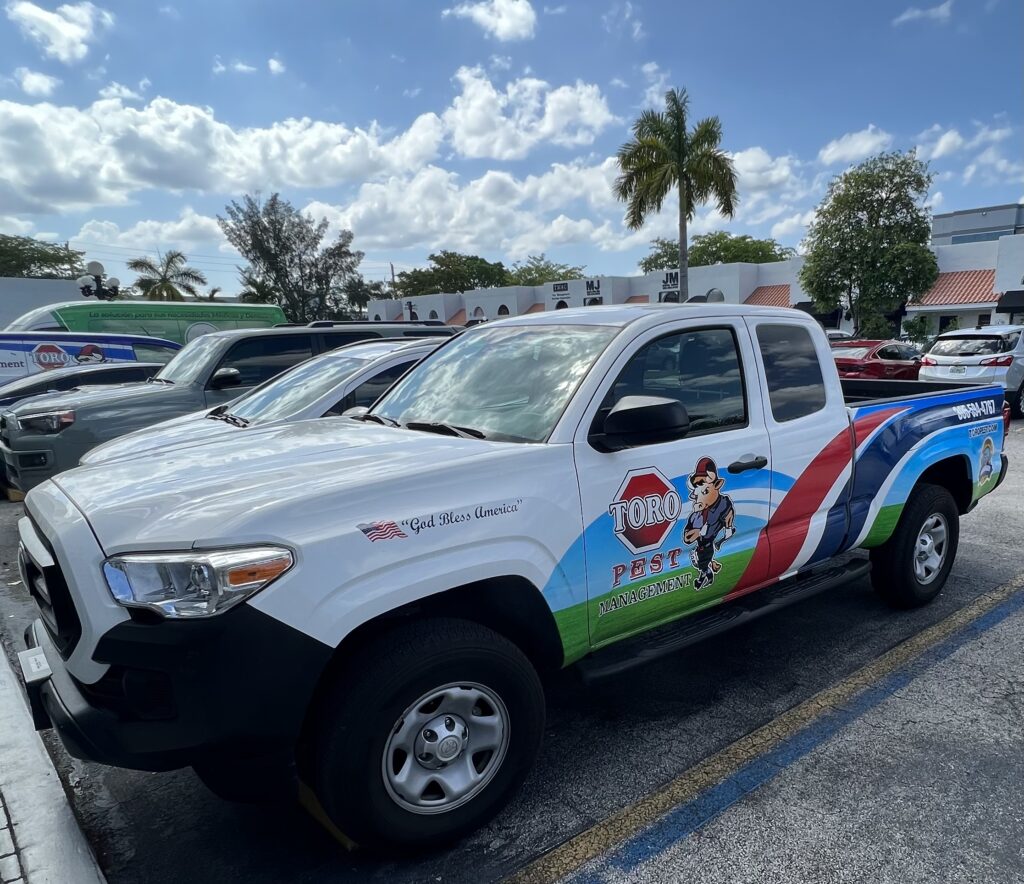
A Toro technician inspects inside and outside your home or business, follows the trails and finds where the ants are nesting, whether that is a wall void, a palm, a mulch bed or the lawn. Once the species is confirmed, nests, trails and entry points are treated with products chosen for that ant and applied according to their label directions, inside and around the perimeter. You also get specific recommendations, such as sealing gaps and trimming plants, and follow-up visits.
If fire ants or other insects are infesting your lawn, ask about our lawn spray service, which treats the insects in your lawn and yard. For year-round coverage, Total Home Protection Gold 365 is an every-other-month service inside and outside your home that starts with a 25-point initial service.
Toro has protected South Florida homes and businesses since 1969, and if the bugs come back, so will Toro, at no additional cost to you.
Contact Toro today
A free inspection & $25 off your first service
A trained Toro technician inspects your home or business, explains what was found and gives you a clear plan and quote, backed by our 110% Satisfaction Guarantee.
305-594-4767Frequently Asked Questions
Why do little black ants keep coming back after I spray?
Are little black ants harmful?
Do little black ants come from outside?
What attracts little black ants to my kitchen?
How long does it take to get rid of little black ants?
Sources
- Little Black Ant, Texas A&M AgriLife Extension, Urban and Structural Entomology
- White-Footed Ant, Technomyrmex difficilis (EDIS IN551), UF/IFAS Extension
- Crazy Ant, Paratrechina longicornis (EDIS IN299), UF/IFAS Extension
- Ant Control for Householders (EF619), University of Kentucky Entomology
- Ants: Pest Notes, University of California Statewide IPM Program
- Controlling Ants in the Home and Landscape, UF/IFAS Extension Pinellas County
Educational content. This article is for general information about pests in South Florida and is not medical, legal or professional advice. If you have a bite, sting or allergic reaction, contact your doctor; in an emergency, call 911. Pest problems vary from home to home, so a licensed professional should inspect before treatment. When using any pesticide, always read and follow the product label.


