
Iguanas
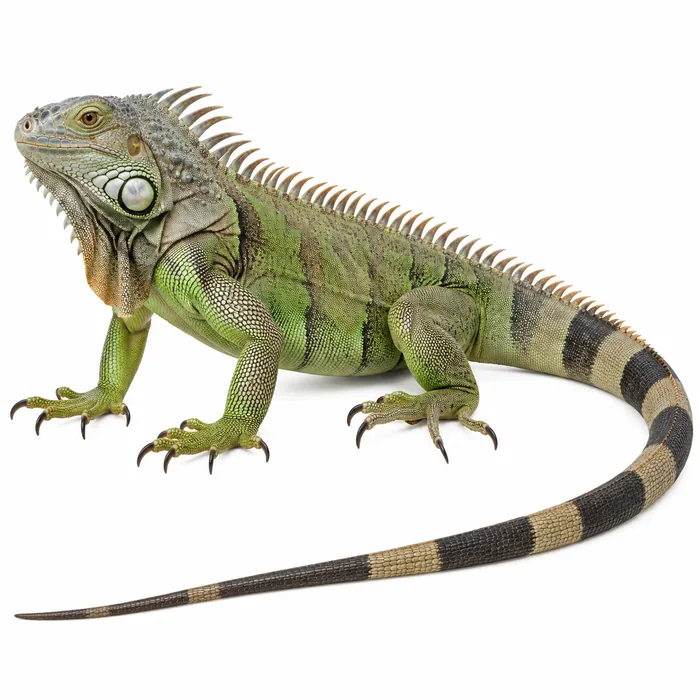
The green iguana (Iguana iguana) is a large, plant-eating lizard that is not native to Florida and is regulated by the Florida Fish and Wildlife Conservation Commission (FWC) as an invasive, Prohibited species. In South Florida it eats landscape plants, digs burrows that can erode and collapse seawalls, sidewalks and canal banks, and leaves droppings on docks, pool decks and inside swimming pools.
- Since 1969Third generation, protecting South Florida
- 110% GuaranteeIf the bugs come back, so will Toro, at no additional cost
- Within 24 HoursResponse guaranteed
- Free InspectionPlus $25 off your first service
What Are Green Iguanas?
The green iguana, Iguana iguana, is a large lizard native to Central America, the tropical parts of South America and some eastern Caribbean islands. It was first reported in Florida in the 1960s in Miami-Dade County. UF/IFAS explains that, because of Florida’s role in the exotic pet trade, iguanas imported as pets escaped or were released, and South Florida’s subtropical climate let them survive and reproduce. Today the FWC reports populations along the Atlantic Coast in several counties and on the Gulf Coast in Collier and Lee counties.
Cold is the main thing that keeps them in check. UF/IFAS notes that freezes keep iguanas limited to the southern half of peninsular Florida, and the FWC describes them as not cold hardy. That puts Miami-Dade, Broward, Palm Beach and the Florida Keys right in the middle of their range.
The FWC classifies green iguanas as invasive and, since April 29, 2021, lists them as a Prohibited species. The agency says they harm native wildlife, damage residential and commercial landscaping and cause damage that is costly to repair. For South Florida homeowners, the biggest concerns are what iguanas do to plants, seawalls, sidewalks and pool areas.
How to Identify Green Iguanas
- Size: males can grow to over 5 feet long and weigh up to 17 pounds; females can also reach 5 feet but usually stay under 7 pounds.
- Color: adults are usually green but can be brown or nearly black, and some turn orange or pink at certain times of year. Hatchlings and young iguanas are typically bright green.
- Males: mature males develop heavy jowls and a throat fan (dewlap) much larger than a female’s.
- Behavior: they bask in the open on sidewalks, docks, seawalls, landscape timbers and mowed areas, and dive into water when frightened. They are strong swimmers and the FWC says they can stay submerged for up to four hours.
Spiny-tailed iguanas are a different group. Two species are established in South Florida: the black spiny-tailed iguana (Ctenosaura similis) and the Mexican spiny-tailed iguana (Ctenosaura pectinata). Adult black spiny-tailed iguanas can exceed 4 feet, are light gray or tan with dark bands, and have rings of spiny scales on the tail. UF/IFAS notes that large males are sometimes mistaken for alligators because of their dark coloring and reduced back spines, and that spiny-tailed iguanas escape into burrows rather than water. They also dig under foundations, sea walls and sidewalks, and have been found in attics and vents.
Green Iguana Life Cycle and Behavior
Green iguanas are active during the day, which is also when they bask and feed. Adults are herbivores that eat foliage, flowers and fruit, and the FWC notes they also eat bird eggs and dead animals on occasion. Juveniles eat more insects and other animal matter, and hatchlings eat adult droppings to pick up the gut bacteria they need to digest plants. Males are territorial toward other males.
Nesting is what causes most structural damage. In South Florida, nesting season runs from about December to May, according to a study led by a Florida Museum of Natural History herpetologist. Females nest in sandy areas such as riverbanks and beaches, and the FWC says a single nest burrow may contain nearly 80 feet of interconnected tunnels. Clutches contain anywhere from 14 to 76 eggs. Raccoons, fish crows and other animals dig up some nests, but once young iguanas reach about 2 feet long they have few natural enemies.
When a cold front pushes temperatures below about 40°F, iguanas become sluggish and stiff, appear “frozen” and can fall from trees. They become active again as it warms up.
Signs Iguanas Are Living on Your Property
- Large lizards basking on seawalls, docks, pool decks, sidewalks or tree branches on sunny days.
- Holes and tunnels along seawalls, canal banks, sidewalks, slabs and foundations.
- Sidewalks, berms or the soil behind a seawall that are eroding, sinking or collapsing.
- Droppings on docks, moored boats, porches, decks, pool platforms and inside the pool.
- Chewed flowers, stripped leaves, eaten tender new growth and damaged fruit such as mangos and figs.
- Splashes and iguanas diving into canals, lakes or pools when you walk outside.
Why Iguanas Are a Problem
Property damage. Burrowing is the most expensive problem. The FWC states that iguana burrowing can erode and collapse sidewalks, foundations, seawalls, berms and canal banks, and UF/IFAS explains that burrows next to seawalls allow erosion and the eventual collapse of the wall. On waterfront homes in Fort Lauderdale, Miami Beach and the Keys, that damage can be serious.
Landscaping. Iguanas eat a wide range of ornamental and garden plants, including orchids, flowers and tender new growth, as well as fruits such as berries, figs, mangos and tomatoes. They can strip a garden or a row of young plants quickly. Read more: What are the plants that iguanas will not eat?
Droppings and Salmonella. The FWC notes that iguanas leave droppings on docks, boats, seawalls, porches, decks, pool platforms and inside swimming pools, and that they can transmit Salmonella bacteria to people through contact with contaminated water or surfaces. UF/IFAS describes their droppings as a possible source of Salmonella, a common cause of food poisoning, and notes that piles of droppings cause odor complaints. Use gloves when cleaning up and wash your hands afterward. Read more: Do iguanas carry disease?
Native wildlife. The FWC reports that iguanas at Bahia Honda State Park have eaten nickerbean, a host plant of the endangered Miami blue butterfly, and that tree snail remains have been found in iguana stomachs at Bill Baggs Cape Florida State Park.
Bites and scratches. Adults normally avoid people, but UF/IFAS warns that when cornered they can bite, cause severe scratches with very sharp claws and deliver a painful slap with the tail. Do not try to grab one by hand.
Where Iguanas Live and Hide on South Florida Properties
- Seawalls, docks and canal banks along Biscayne Bay, the Intracoastal and inland canals and lakes.
- Trees, shrubs and dense vegetation, where iguanas climb, feed and bask.
- Burrows under sidewalks, slabs, foundations, berms and sandy areas near water.
- Pool areas, patios and pool decks where they bask and leave droppings.
- Piles of rock, timber and debris, and dense thickets that give cover.
- Common areas of condos, HOAs, golf courses, marinas and hotels with lakes or waterfront landscaping.
When Iguanas Are Most Active in South Florida
| Season | Iguana activity | What to do |
|---|---|---|
| December to May | Nesting season in South Florida; females dig burrows and egg chambers in banks and sandy soil | Inspect seawalls, banks and sidewalks for new holes and fill empty burrows during the day. |
| Winter cold fronts | Below about 40°F, iguanas become sluggish and may fall from trees | Do not bring them indoors or into a car; keep children and pets away and call a professional if needed. |
| Spring and summer | Adults bask in the open and feed on foliage, flowers and fruit in yards and gardens | Protect plants with cages or screen and keep fallen fruit and other food out of reach. |
| Year-round | Green iguanas live in South Florida all year, and the FWC allows humane removal on private property year-round | Never feed iguanas and keep up deterrents such as water spray and trunk guards. |
How to Keep Iguanas Away
These steps come from FWC and UF/IFAS guidance. Read more: How to keep iguanas away from my yard
- Never feed iguanas. UF/IFAS notes that feeding draws more iguanas, along with rats and raccoons.
- Change the landscape. Remove or protect the plants iguanas prefer, and trim dense thickets. Remove piles of timber and rock that give them cover.
- Fill empty burrows with a mix of concrete and sand during the day, when the iguanas are likely to be away.
- Exclude them from plants and trees. Protect valuable plants with cages or screen enclosures, and wrap tree trunks with sheet metal about 18 inches up from the base to stop climbing. UF/IFAS warns that chain link fences can trap larger iguanas.
- Harass them. The FWC suggests spraying iguanas with water, hanging wind chimes or other items that make intermittent noise and hanging reflective CDs, moved often. Read more: What are iguanas afraid of?
- Follow FWC rules. Do not release or relocate iguanas anywhere in Florida, do not keep a live one without an FWC permit and do not use poisons, which have no registered use for reptiles in Florida. Any removal must be humane, because the state’s anti-cruelty law still applies.
How Toro Handles Iguana Problems
- Property inspectionA Toro technician inspects your yard, seawall, dock, pool area and landscaping to find basking sites, burrows, droppings and the conditions that are drawing iguanas to your property.
- IdentificationWe confirm whether you are dealing with green iguanas or spiny-tailed iguanas, since they behave differently: green iguanas escape into water, while spiny-tailed iguanas retreat into burrows.
- Humane trapping and removalThrough our wildlife control service, we trap and remove iguanas humanely, following FWC rules for this Prohibited species, including the anti-cruelty law and the ban on releasing iguanas elsewhere.
- Prevention and follow-upWe recommend changes that make your property less inviting, such as filling burrows, protecting plants and removing cover, and follow up if iguanas move back in.
Toro Pest Management has served South Florida since 1969, from waterfront homes in Miami Beach and Fort Lauderdale to Boca Raton and Key West. We also work with property managers and hotels and resorts on common areas, lakes and waterfronts. We respond within 24 hours, guaranteed, and offer a free inspection plus $25 off your first service. Call 305-594-4767. Hablamos Español.
Seeing signs of iguanas? Get a free inspection and $25 off your first service.
Schedule Your Free InspectionIguanas: Frequently Asked Questions
Is it legal to remove iguanas from my property in Florida?
Yes. The FWC says green iguanas are not protected in Florida except by the state's anti-cruelty laws, and that they can be humanely killed year-round on private property with the landowner's permission. The FWC encourages landowners to remove them. Captured iguanas cannot be relocated or released elsewhere in Florida, and keeping a live one requires an FWC permit. Many homeowners hire a wildlife control professional.
Do iguanas carry disease?
The FWC states that iguanas can transmit Salmonella bacteria to people through contact with contaminated water or surfaces, and UF/IFAS describes iguana droppings as a possible source of Salmonella. That is a concern where iguanas leave droppings on docks, patios, pool decks and in pools. Avoid touching droppings with bare hands, clean contaminated surfaces and wash your hands after outdoor cleanup.
How do I keep iguanas away from my yard?
The FWC and UF/IFAS recommend making the yard less attractive: remove the plants they like to eat, never feed iguanas, fill in empty burrows, trim dense thickets and clear piles of rock or timber. Protect valuable plants with cages or screen, and wrap tree trunks with sheet metal to stop climbing. Deterrents such as water spray and intermittent noise also help, especially when used together with these steps.
What are iguanas afraid of?
Iguanas are wary animals that usually avoid people. The FWC suggests spraying them with water, hanging wind chimes or other items that make intermittent noises, and hanging reflective CDs. UF/IFAS adds that reflective items should be moved often so iguanas do not get used to them, and that frightened green iguanas usually escape by diving into water, while spiny-tailed iguanas run into burrows.
What plants will iguanas not eat?
UF/IFAS notes that iguanas do not eat citrus, and that tough, thick-leaved plants and toxic plants are less favored. They readily eat tender new growth, most flowers and fruits, orchids, and fruits such as berries, figs, mangos and tomatoes. No plant is completely iguana-proof, so combine plant choices with cages, screens or trunk guards around the plants you care about most.
Can iguanas damage my seawall or foundation?
Yes. The FWC says female green iguanas dig egg chambers that may include nearly 80 feet of interconnected tunnels, and that burrowing can erode and collapse sidewalks, foundations, seawalls, berms and canal banks. UF/IFAS explains that burrows next to seawalls allow erosion and the eventual collapse of the wall. Filling empty burrows and catching activity early helps limit the damage.
What should I do if I find a cold-stunned iguana?
When temperatures drop below about 40°F, iguanas become sluggish and can appear frozen or fall from trees. The FWC advises against bringing a cold-stunned iguana indoors or into your car to warm it up. They can recover faster than expected and defend themselves with whipping tails, sharp teeth and claws. Leave it alone or contact a professional wildlife control operator.
Related Pests
Pest Control Across South Florida
Toro treats iguanas in homes and businesses throughout Miami-Dade, Broward and Palm Beach counties, including:
- Miami
- Hialeah
- Doral
- Miami Beach
- Coral Gables
- Homestead
- Fort Lauderdale
- Hollywood
- Pembroke Pines
- Miramar
- Boca Raton
- West Palm Beach
Last updated: October 29, 2026


110% Satisfaction Guaranteed
If the bugs come back, so will TORO at no additional cost to you. TORO will respond with in 24 hours Guaranteed. Our technician will arrive quickly and deal with the pest problem to prevent recurrence.

